Title: "Unveiling Inhumane Conditions: The Troubling Reality of Immigrant Detention at South Florida Detention Facility
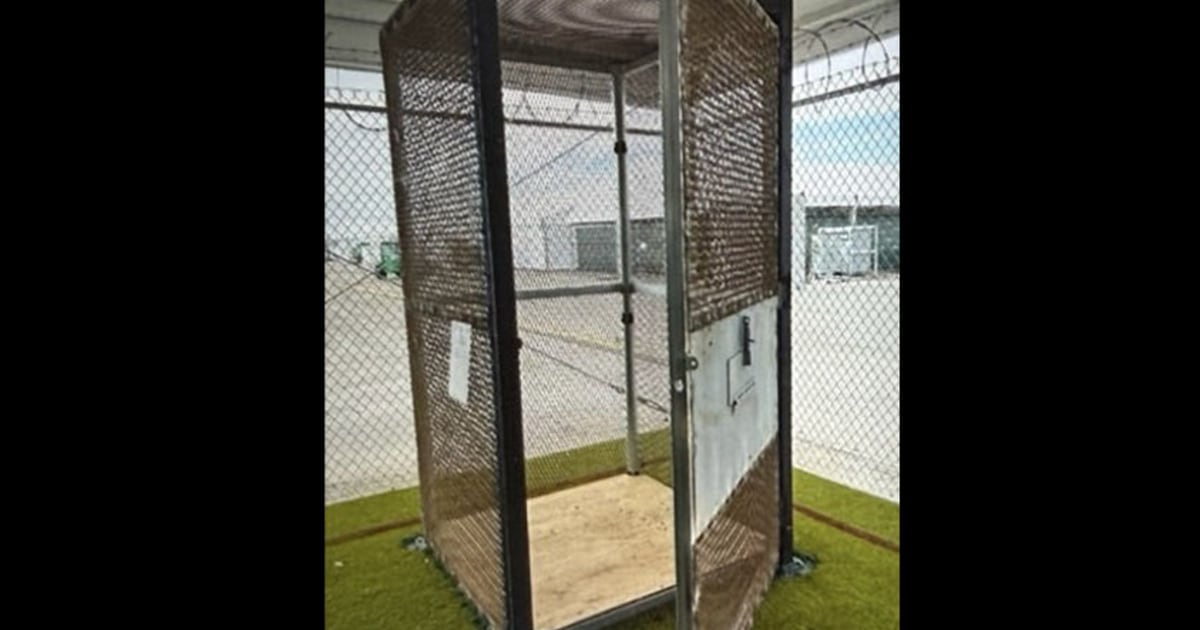
In Florida, immigrants detained at the South Florida Detention Facility were reportedly confined in small outdoor cages resembling telephone booths for over an hour at a time, as revealed by a recent report from the Department of Homeland Security's inspector general. These cramped cages, described as "calming areas" by facility staff, were found to be highly unconventional and not in line with humane treatment standards. The watchdog report highlighted the use of these restrictive spaces, which were significantly smaller than the recommended size for holding individuals in detention facilities.
The DHS inspector general's visit to the facility in January uncovered the existence of these "small metal enclosures," measuring approximately 16 square feet, as well as indoor cages measuring 18 square feet. These dimensions fall far below the minimum space requirements specified by ICE guidelines for holding individuals in immigration detention facilities. Despite being referred to as "calming areas," the cages were deemed inadequate for humane treatment and raised concerns about the conditions faced by detainees at the facility.
The South Florida Detention Facility, known as "Alligator Alcatraz," was established in the Everglades in 2025 under a state and federal partnership agreement. The facility, operated under a 287(g) agreement, allowed state and local law enforcement agencies to carry out immigration enforcement duties. While ICE was responsible for oversight to ensure compliance with federal immigration law and policies, the inspector general's report revealed discrepancies regarding the federal government's authority over the facility's operations.
Despite the lack of a formal contract between ICE and the state of Florida to run the facility, ICE personnel were present on-site, and detainees were provided with an ICE handbook indicating the facility's affiliation with the agency. The inspector general's report raised questions about the federal government's involvement in the day-to-day operations of the detention facility, prompting further scrutiny of the agreement between Florida agencies and ICE.
Following the closure of the facility in June, concerns about the treatment of detainees and the conditions within the facility persisted. Amnesty International's report highlighted inhuman and unsanitary conditions, including overflowing toilets, exposure to insects, and the use of the metal cage as a form of punishment. The organization concluded that the use of the "box" as a punitive measure amounted to torture, further underscoring the need for improved standards of care and treatment for individuals in immigration detention.
In light of the inspector general's findings and the ongoing scrutiny of the facility's operations, it is essential to prioritize the well-being and rights of detainees in immigration detention facilities. Addressing the concerns raised by watchdog reports and advocacy organizations is crucial to ensuring that individuals in detention are treated with dignity and respect, in accordance with established standards of humane treatment. Efforts to improve oversight and accountability within the immigration detention system are necessary to prevent instances of mistreatment and uphold the rights of all individuals in custody.