Mercury's Shrinkage Revealed: New Insights from Recent Study
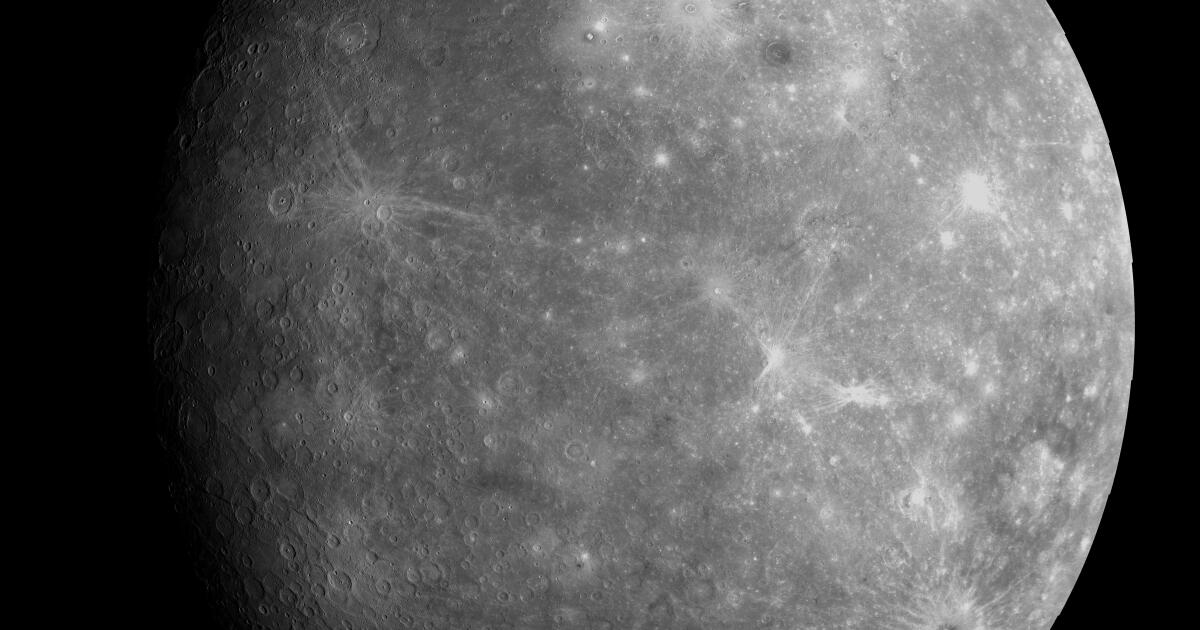
Mercury, the smallest planet in our solar system, is undergoing a significant shrinkage process, according to a recent study by scientists from the German Aerospace Center’s Institute of Space Research. The study suggests that Mercury's diameter may be decreasing by up to 14 miles, which is 30% more than previously thought. The planet's rough surface, shaped by impact craters, may have masked the true extent of this shrinkage.
The findings of the study, published in the journal Geophysical Research Letters, come as the European and Japanese spacecraft, BepiColombo, are on their way to orbit Mercury. The spacecraft is equipped with a laser instrument that will help confirm the extent of Mercury's shrinkage due to internal cooling. This new data could provide valuable insights into the evolution of Mercury and other contracting worlds in our solar system.
Mercury has been shrinking since its formation 4.5 billion years ago, as its hot iron core, mantle, and crust cool and contract. The researchers compared maps of Mercury's surface features to assess the planet's contraction. They found that the roughest areas of the planet showed fewer signs of shrinkage wrinkles, possibly due to impact debris covering them. By accounting for these obscured regions, the researchers were able to refine their estimates of Mercury's shrinkage.
The study's lead author, Gaku Nishiyama, expressed excitement about the new findings and the potential insights they could provide into Mercury's evolution. The research team's work could have implications for understanding the processes at play on other contracting worlds in our solar system. As BepiColombo approaches Mercury for a closer study, scientists are eager to uncover more about the planet's changing landscape and what it reveals about its history.
In conclusion, the latest study on Mercury's shrinkage highlights the dynamic nature of our solar system's smallest planet. With new data from the BepiColombo mission and ongoing research efforts, scientists are gaining a deeper understanding of Mercury's evolution and the processes shaping its surface. The findings could have broader implications for studying planetary evolution and contraction in our solar system and beyond.