Swiftiephylus: Taylor Swift Inspires New Genus of Plant-Feeding Insects
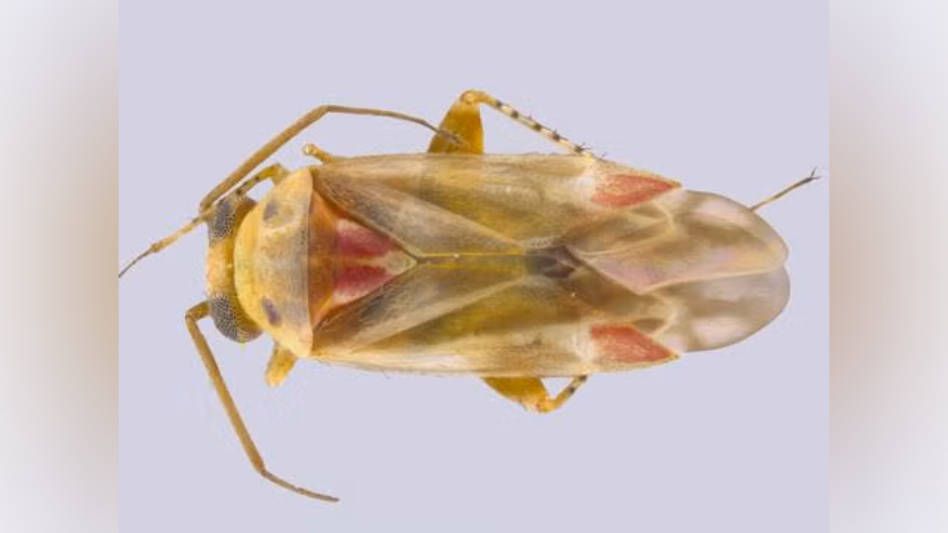
Taylor Swift, the renowned Grammy Award-winning artist, has now been immortalized in the world of entomology as a newly discovered genus of plant-feeding insects from Australia. Sarah Schroeder, a doctoral student at the University of California, Riverside, named these insects after the singer to shed light on insect conservation and the diversity of undiscovered species. The newly described insects belong to the Miridae family, known for its plant feeders and predators, and are closely associated with Australian she-oaks, where they blend in with their pale yellow and red coloring.
The 12 new species of insects, including the genus Swiftiephylus, were recently published in the journal Insect Systematics and Evolution. The names of the species, such as Swiftiephylus taylorae and Swiftiephylus poetorum, are inspired by Taylor Swift and her albums. These insects, despite feeding off she-oak trees, are not harmful to the plants and have evolved to camouflage among the flowers. The specimens were collected between 1995 and 2004 during a biodiversity effort and have been waiting decades to be formally described.
Schroeder and her advisor, Christiane Weirauch, examined over 500 specimens from the American Museum of Natural History and Australian Museum to study the evolutionary relationships of these insects. The research aims to understand how the insects spread, developed specialized relationships with plants, and diversified over time. By connecting scientific knowledge with personal experiences, Schroeder hopes to raise awareness about the importance of taxonomy in conservation efforts and the vast undocumented insect diversity that still exists.
The naming of these insects after Taylor Swift has sparked some controversy in entomological circles, but Schroeder believes it can positively impact conservation efforts. Taxonomy plays a crucial role in conservation by identifying and documenting species, ultimately aiding in their protection. Honoring Taylor Swift through these insect names serves as a tribute to conservation science and highlights the significance of preserving unknown biodiversity.