Unveiling Mercury's Shrinkage: Insights into the Planet's Evolution and Composition
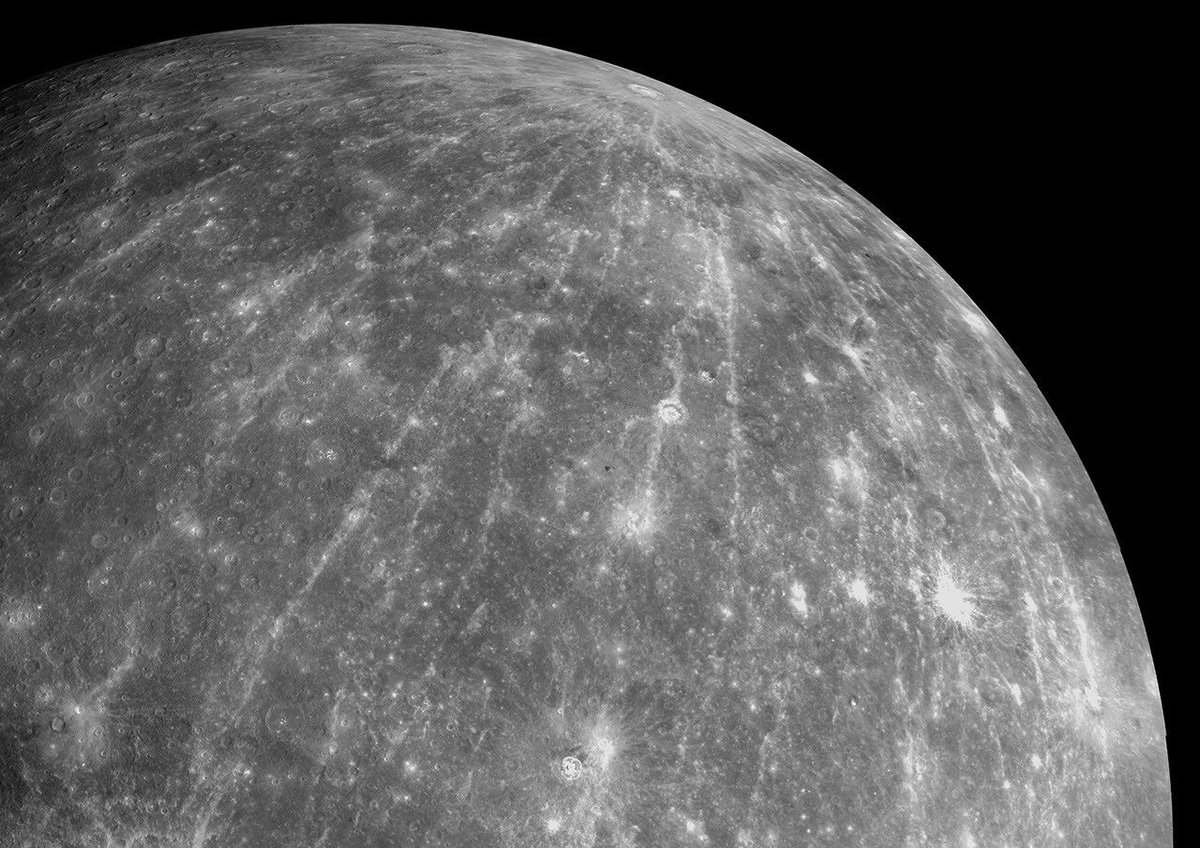
Mercury, the closest planet to the sun, is undergoing a rapid shrinking process, as indicated by the emergence of hills and ridges on its surface known as shortening structures. Recent research has revealed that Mercury has contracted more than previously believed, shedding light on its evolution and composition over the past 4.5 billion years.
Due to its proximity to the sun, studying Mercury is challenging, with limited spacecraft missions and observational difficulties from Earth. Scientists rely on data from remote satellites to understand the planet's history and internal structure. By analyzing the planet's surface roughness, researchers have determined that Mercury may have shrunk by 10 to 30 percent more than initially estimated, highlighting the impact of surface features on measuring planetary contraction.
The study's findings suggest that Mercury's contraction could be up to 23 kilometers, significantly more than the previous estimate of 11 kilometers. This revised understanding of Mercury's geological history provides valuable insights into its thermal evolution and raises questions about the implications for other celestial bodies like the moon and Mars, which may also exhibit similar shrinkage patterns.
Gaku Nishiyama, the lead author of the study, emphasizes the importance of reevaluating Mercury's radial contraction to gain a deeper understanding of its evolution. The implications of these findings extend beyond Mercury and could potentially apply to other planetary bodies in our solar system. Further research is needed to explore the broader implications of Mercury's contraction and its impact on our understanding of planetary evolution.
In conclusion, the new analysis of Mercury's shrinking process offers a fresh perspective on the planet's geological history and provides valuable insights into its evolution. By reevaluating the extent of Mercury's contraction, scientists are uncovering new information about the planet's composition and thermal evolution, with potential implications for other celestial bodies in our solar system.