Serbia's Crucial Early Parliamentary Election: A Test of Vucic's Leadership
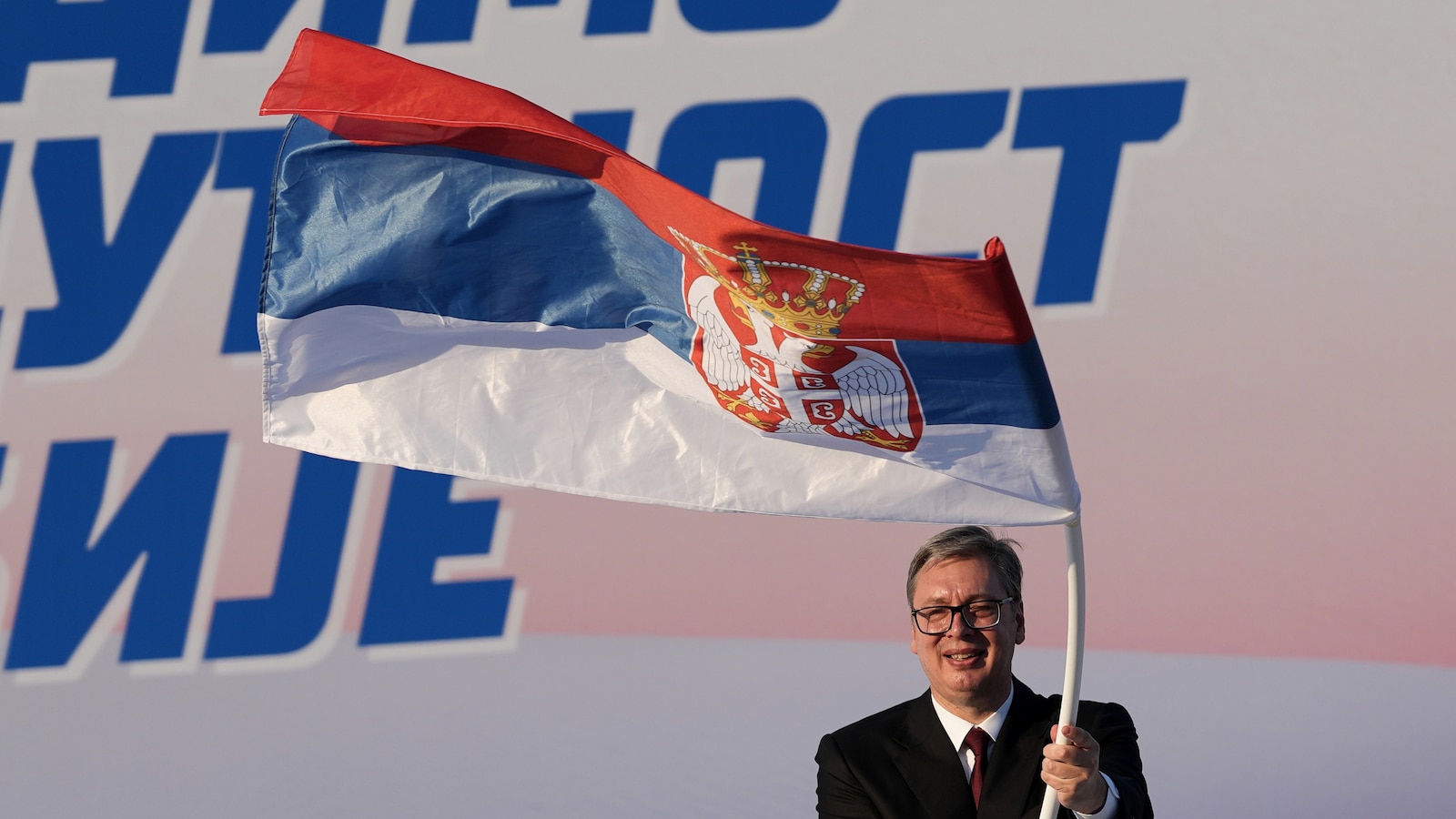
The Serbian government has put forward a proposal to dissolve Parliament, initiating the process for an early parliamentary election that could potentially see President Aleksandar Vucic transition to the role of prime minister. This upcoming vote is viewed as a crucial test of Vucic's leadership in Serbia following a series of mass protests over the past year. The political atmosphere is tense as the ruling populists aim to retain power amidst widespread dissatisfaction among the populace. The official date for the election is anticipated to be announced by Vucic later this week, with expectations pointing towards October 25 as the likely day for the ballot.
The wave of protests in Serbia was triggered by a tragic incident at a train station in northern Serbia on November 1, 2024, resulting in the deaths of 16 individuals. The demonstrators demanded accountability for the collapse of a concrete canopy in Novi Sad, attributing it to corruption and poor renovation work. The sustained protests, which at times drew hundreds of thousands of participants, have posed a significant challenge to Vucic's long-standing authority. Criticisms against the president and his Serbian Progressive Party have centered on allegations of stifling democratic freedoms and alleged connections to organized crime, accusations that Vucic vehemently denies. Serbia's aspirations to join the European Union have faced setbacks under Vucic's leadership, characterized by close ties with Russia and China.
Recent EU pressure on Vucic has intensified following public tributes to war criminal Ratko Mladic, the former Bosnian Serb army commander, who was honored as a hero in Serbia despite a U.N. court conviction. Vucic has announced his intention to step down from the presidency to actively participate in the parliamentary election campaign, as he is ineligible to seek another term as president after serving two nearly full terms. A separate early presidential election will be conducted alongside the parliamentary vote.
Vucic's response to the protests has drawn international concern over allegations of police brutality and arbitrary detentions, with the president accusing the student and professor-led demonstrators of seeking to undermine the state. The opposition list for the parliamentary election is expected to feature university professors and experts, reflecting a diverse range of voices challenging the ruling populists. Since assuming power in 2012, the populists have steadily consolidated control over Serbia's institutions and mainstream media, shaping the country's political landscape.
In conclusion, the upcoming early parliamentary election in Serbia represents a critical juncture in the country's political landscape, with President Vucic poised to navigate a challenging electoral environment amidst ongoing protests and international scrutiny. The outcome of the election will not only determine the composition of the new Parliament but also have far-reaching implications for Serbia's future trajectory and its relationship with the European Union and other global powers.