Trade Tensions Escalate: U.S.-China Dispute Over 'Non-Market' Term at G20 Meeting
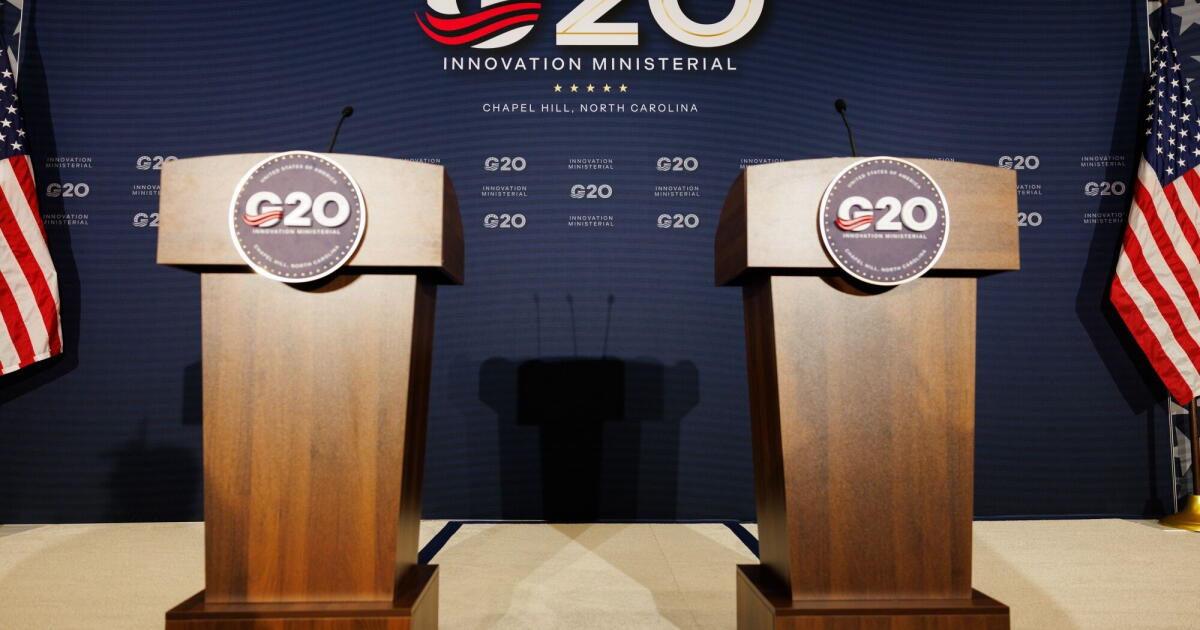
A dispute between Chinese and U.S. officials at a Group of 20 finance chiefs meeting centered around disagreements over the inclusion of the term "non-market" in a sentence addressing trade imbalances. The U.S. accused China of obstructing the issuance of a joint communique due to this disagreement, with China viewing the term as a veiled attack on its state-owned enterprises (SOEs). Despite efforts to reach consensus, the two sides failed to agree on the wording, leading to the exclusion of the term from the final statement.
The disagreement underscores the underlying tensions between the world's largest economies ahead of an upcoming summit between Chinese leader Xi Jinping and U.S. President Donald Trump. The U.S. Treasury Secretary, Scott Bessent, plays a crucial role in managing the relationship between Washington and Beijing, particularly in trade negotiations and discussions on artificial intelligence.
The U.S. government defines "non-market" policies as interventions that distort global trade in favor of domestic industries, including actions by state-owned or controlled enterprises. This term has been a point of contention in U.S. criticism of China's trade practices, and its inclusion in the G20 communique could be interpreted as a reference to China without explicitly naming the country.
China's Ministry of Finance did not directly respond to Bessent's comments but emphasized the need for a balanced view of global imbalances. Chinese officials expressed opposition to using multilateral platforms like the G20 to justify protectionism and containment of China, highlighting the importance of addressing economic imbalances through comprehensive and objective means.
The ongoing trade tensions between the U.S. and China, particularly regarding China's export surplus and alleged state support for domestic companies, have been a focal point in their relationship. Bessent criticized China's policies that rely on exports for growth and highlighted industrial subsidies, pointing to specific examples like carmaker BYD Co. as beneficiaries of government support.
China has refuted accusations of unfair competition and non-market practices, citing subsidies provided by the U.S. and the European Union in industries such as electric vehicles and artificial intelligence. The Chinese government released a white paper addressing the issue of excess capacity, arguing that accusations of unfair competition are based on double standards and genuine unfairness.
In conclusion, the disagreement over the inclusion of the term "non-market" in the G20 communique reflects the broader trade tensions between the U.S. and China, highlighting differing views on trade practices and economic policies. As both countries navigate their complex relationship, addressing these disagreements will be crucial in fostering a more balanced and cooperative trade environment.