Mount Sinabung Eruption: Indonesia's Volcanic Alert Raised to 'Watch' Level
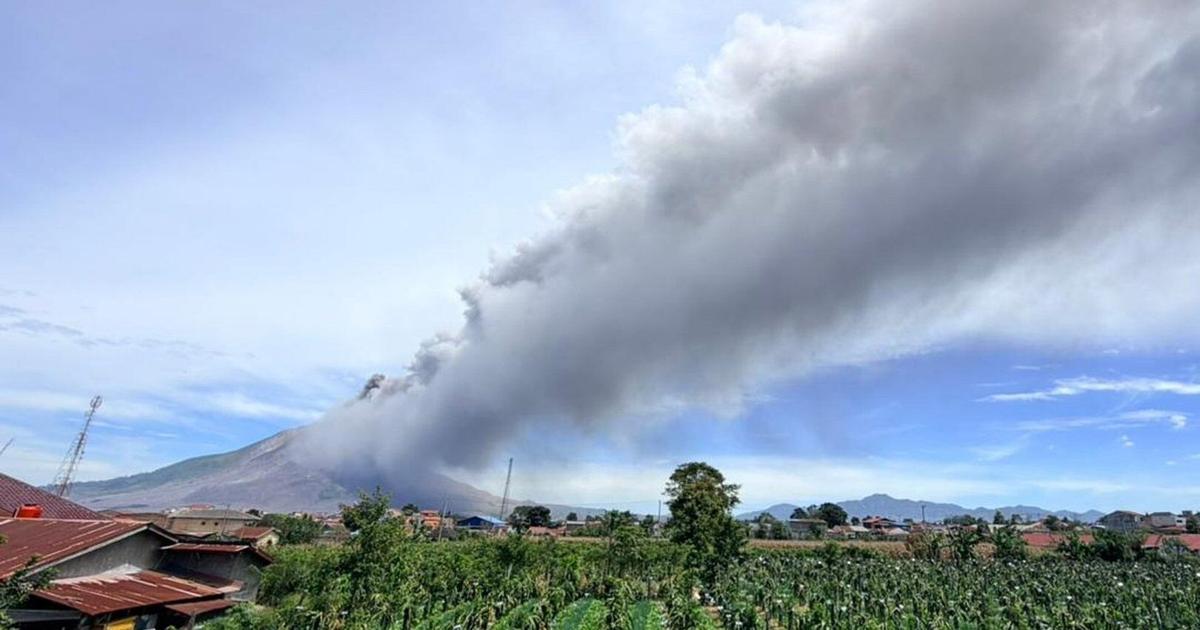
Mount Sinabung, located in Indonesia, erupted on Monday, sending a plume of black ash and smoke 3,500 meters into the sky above Sumatra island. The eruption did not result in any immediate casualties, evacuations, or flight disruptions, but residents and tourists were advised to avoid activities in nearby villages in Karo district and areas within 6 kilometers of the summit. Gray ash covered roads, vehicles, and buildings in affected villages, prompting local authorities to distribute masks to residents for protection.
The volcano alert level was raised to "Watch," the second-highest level, expanding the safe zone around the 2,600-meter mountain. Indonesia's Geological Agency warned of the possibility of a larger eruption following this initial activity. Increased seismic activity, including earthquakes, had been observed in mid-August, leading to the expanded radius for public activities. Over the past few years, around 30,000 people have been displaced from their homes near Sinabung due to volcanic activity.
Indonesia, with its population of over 280 million people, is prone to seismic events, given its location on the Pacific "Ring of Fire," a region known for its volcanic and tectonic activity. Sinabung is one of more than 120 active volcanoes in the country. The eruption serves as a reminder of the geological challenges faced by Indonesia and the need for vigilance in monitoring volcanic activity to ensure the safety of residents and visitors in the region.