Unveiling the Universe: NASA's Roman Space Telescope Mission
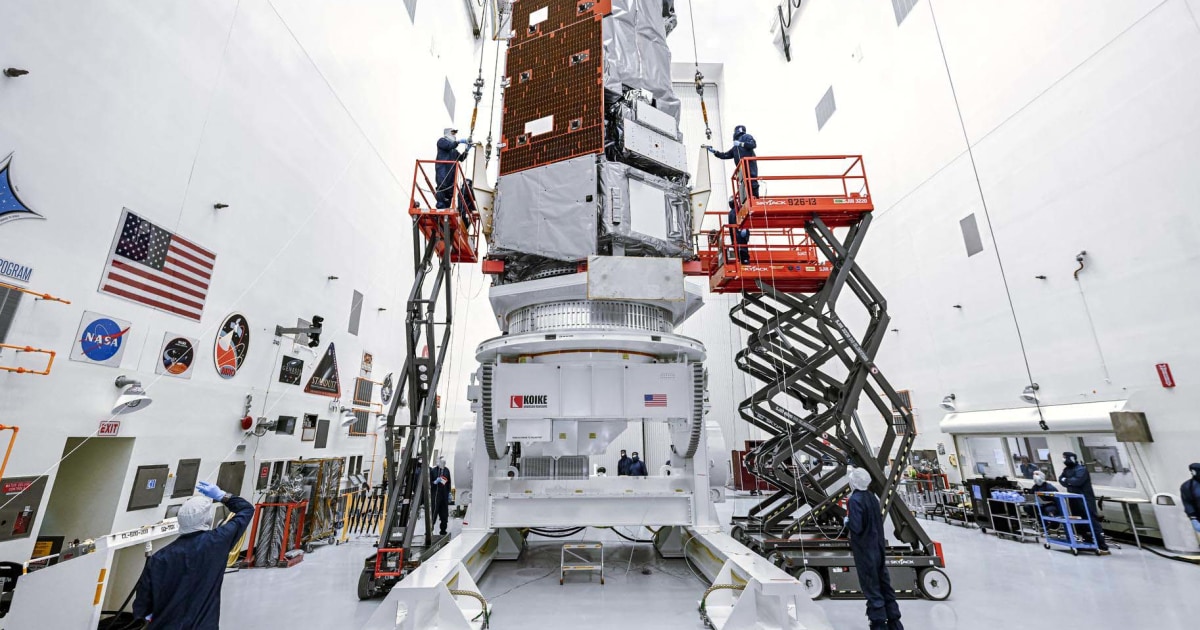
NASA is preparing to launch the Nancy Grace Roman Space Telescope, a cutting-edge observatory that will explore the mysteries of the universe. The telescope is scheduled to lift off from NASA's Kennedy Space Center in Florida on Sunday at 7:26 a.m. ET aboard a SpaceX Falcon Heavy rocket. Live coverage of the launch will be available on NASA's website starting at 6:20 a.m. ET.
The Roman Space Telescope is expected to revolutionize our understanding of the cosmos by surveying hundreds of millions of stars and billions of galaxies. It will capture panoramic views of the sky, study unexplored regions of the Milky Way, and identify over 100,000 planets orbiting other stars. Additionally, the telescope will investigate dark matter and dark energy, two of the most perplexing phenomena in astronomy.
Astrophysicist Neil deGrasse Tyson highlighted the significance of the telescope's mission in addressing fundamental questions about dark matter and dark energy. The $4.3 billion project has been in development for nearly two decades and is launching ahead of schedule despite challenges posed by the Covid pandemic and government shutdowns.
After its launch, the Roman telescope will travel to its final destination approximately 1 million miles from Earth, where it will join the James Webb Space Telescope at the L2 Lagrange point. The telescope's capabilities surpass those of the Hubble Space Telescope, as it can survey the sky 1,000 times faster and capture images of larger sky patches.
The Roman telescope's mission will consist of three primary surveys, including an extensive study of the galactic bulge at the Milky Way's center and investigations into dark matter and dark energy. Dark matter, the invisible substance that dominates galaxies, and dark energy, the force driving the universe's expansion, are key areas of focus for the telescope's research.
In conclusion, the launch of the Nancy Grace Roman Space Telescope marks a significant milestone in space exploration, offering the potential to unravel some of the universe's greatest mysteries and provide new insights into the nature of dark matter and dark energy.