Exploring the Cosmos: NASA's Roman Space Telescope Mission
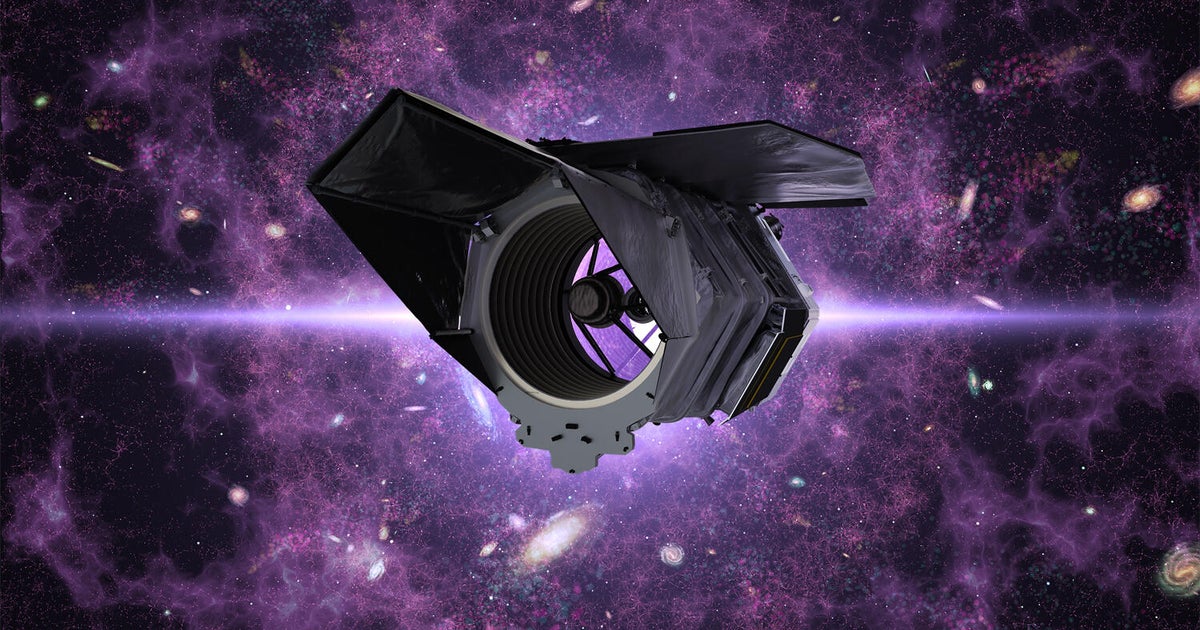
NASA's Roman Space Telescope, equipped with a donated Hubble-class mirror, is set to launch on a groundbreaking mission to explore the universe in unprecedented detail. The telescope's wide-field camera will capture ultra-sharp images that would require half a million 4K TVs to display fully, providing a new perspective on the cosmos. With a 300-megapixel camera, Roman will collect data 1,000 times faster than the Hubble Space Telescope, shedding light on dark matter, dark energy, and potentially habitable planets beyond our solar system.
Named after NASA's first chief astronomer, Nancy Grace Roman, the telescope will be launched atop a SpaceX Falcon Heavy rocket from the Kennedy Space Center. Positioned at Lagrange Point No. 2, a million miles from Earth, Roman will study dark matter and dark energy, offering insights into the universe's structure and evolution. By scanning the sky at unprecedented speeds, Roman aims to address discrepancies in our understanding of the cosmos, potentially challenging the standard model of cosmology.
Roman's advanced instruments, including a wide-field camera and a coronagraph, will enable the detection of exoplanets and the analysis of their atmospheres. The telescope is expected to discover over 100,000 exoplanets during its 18-month observation period, providing valuable data on planetary compositions and characteristics. With a primary mirror donated by the National Reconnaissance Office, Roman is a cost-effective yet powerful tool for astronomical research, offering a new atlas of the universe.
In conclusion, NASA's Roman Space Telescope represents a significant leap forward in our exploration of the cosmos. With its cutting-edge technology and ambitious mission objectives, Roman is poised to revolutionize our understanding of dark matter, dark energy, and the universe's fundamental nature. By capturing high-resolution images and detecting exoplanets, Roman will unlock new insights into the mysteries of the universe, paving the way for groundbreaking discoveries in astronomy and astrophysics.