The Witness Tree of Eutaw Springs: A Living Monument to the Revolutionary War
In Eutaw Springs, South Carolina, a massive live oak tree stands as a witness to the events of the Revolutionary War. Historian Garrison Marcoux ponders the tree's role in the conflict, imagining soldiers seeking shelter or meeting their fate beneath its branches. This "witness tree" has survived for over two centuries, but now faces a battle for its own survival as it is being strangled by the chains and cables meant to support it.
Arborists believe the tree was present during the Battle of Eutaw Springs in 1781, the final open field engagement of the American Revolution. The tree, estimated to be around 50 years old at the time, bore witness to the fierce clashes between British and colonial forces led by notable figures like Lt. Col. Henry "Light-Horse Harry" Lee and Brig. Gen. Francis Marion. Despite the bloody nature of the battle, the oak stood tall, enduring the test of time.
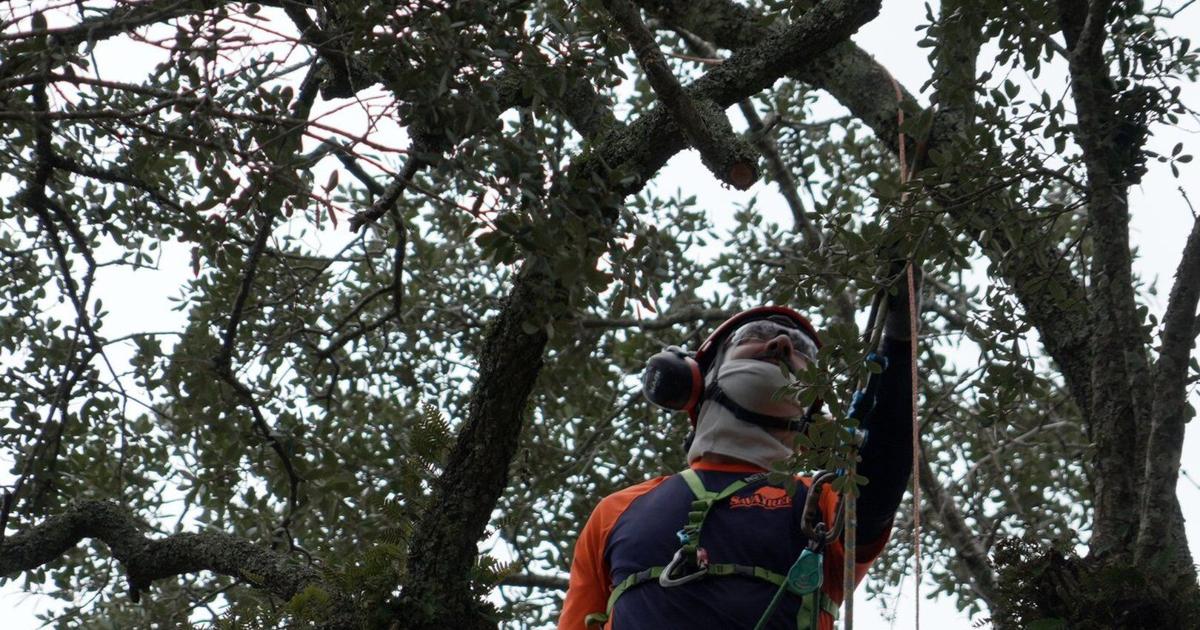
Over the years, the oak has faced various challenges, including a lightning strike that split it in two. Workers used steel cables and chains to bind the branches together, but these supports are now harming the tree as they cut into its trunk and branches. To save the tree, preservationists have initiated a project to remove the old supports, inject nutrients into the soil, and install new cables to stabilize the oak.
The preservation efforts, led by South Carolina 250 and the American Battlefield Trust, aim to ensure the tree's longevity and inspire future generations. While the outcome is uncertain, arborist Aron Landsaw is optimistic about the oak's future, hoping it will stand for at least another century as a living testament to the events of the Revolutionary War.