NASA's Lunar Reconnaissance Orbiter Captures New Moon Crater from SpaceX Falcon 9 Impact
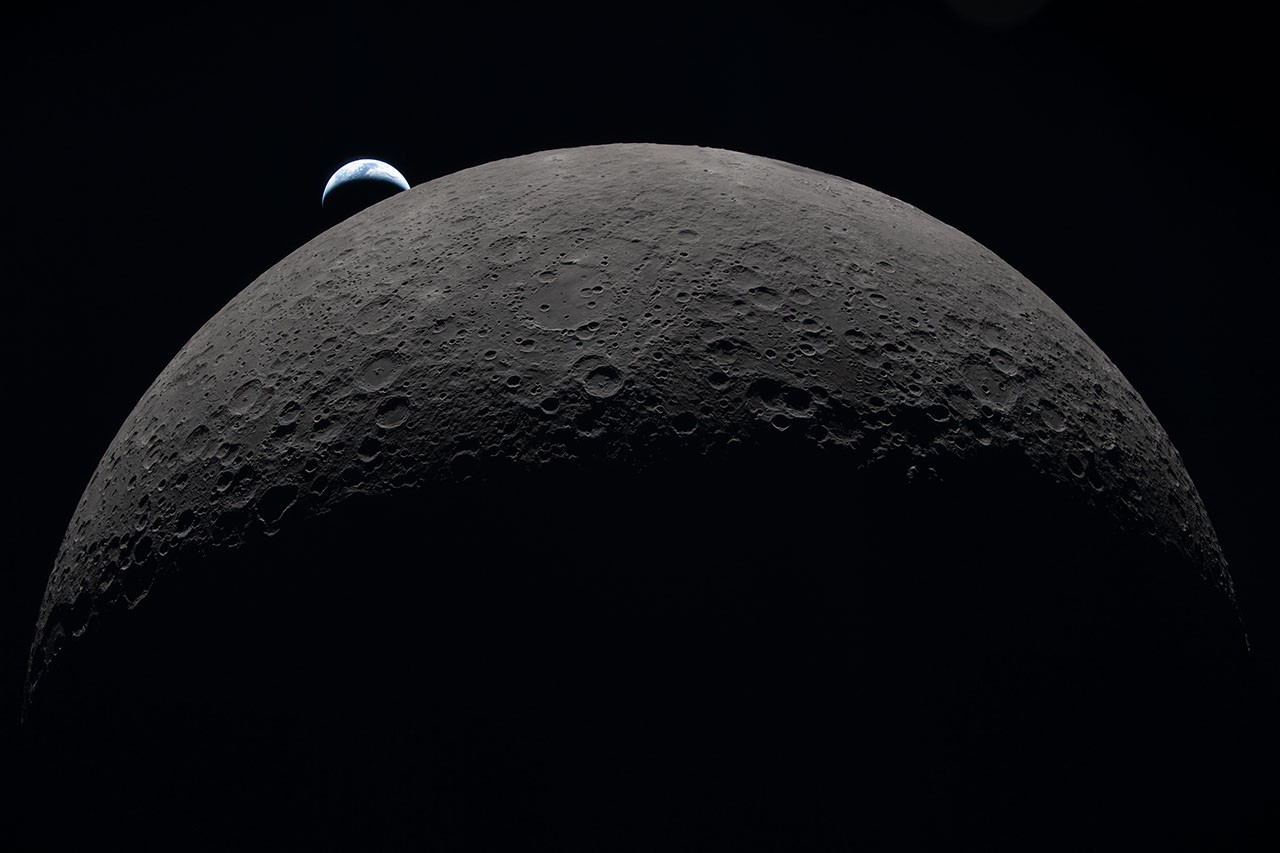
NASA's Lunar Reconnaissance Orbiter (LRO) recently photographed a new crater on the Moon that formed on August 5 after a SpaceX Falcon 9 upper stage impacted the surface. Engineers adjusted the spacecraft's cameras to capture images of the crater during its orbits around the Moon, ensuring precise timing and pointing to capture the crater under different lighting conditions. The crater's rim was measured to be 60 feet wide, and its depth was estimated to be less than 10 feet based on the length of its shadow.
The LRO used its Narrow-Angle Camera to capture detailed images of the crater, revealing bright and dark rays extending from the impact site. The dark streaks consist of weathered material altered by solar wind and cosmic rays, while the bright streaks near the rim are fresh material excavated from deeper underground. The impact site was located through global coordination efforts involving astronomers and NASA's Center for Near Earth Object Studies, which refined the trajectory of the impact and provided the coordinates to the Korea Pathfinder Lunar Orbiter (Danuri) team for further imaging.
The Danuri mission successfully imaged the crater, confirming the accuracy of the impact prediction. The coordinates of the crater were shared with NASA's LRO team, who updated the crater center coordinates based on their follow-up imaging sequence. The new coordinates for the crater are 19.4759°N, 266.7138°E, at an elevation of 511 meters. The collaborative effort between NASA, astronomers, and international partners allowed for the successful imaging and analysis of the new lunar crater.
In conclusion, the recent impact on the Moon resulting in a new crater was captured by NASA's LRO, showcasing the precision and capabilities of space imaging technology. The coordinated efforts of experts and international teams led to the accurate prediction and imaging of the impact site, providing valuable insights into lunar surface dynamics and impact events.