Legal Approval Granted for Paint Tests on Historic Landmark Building Near White House
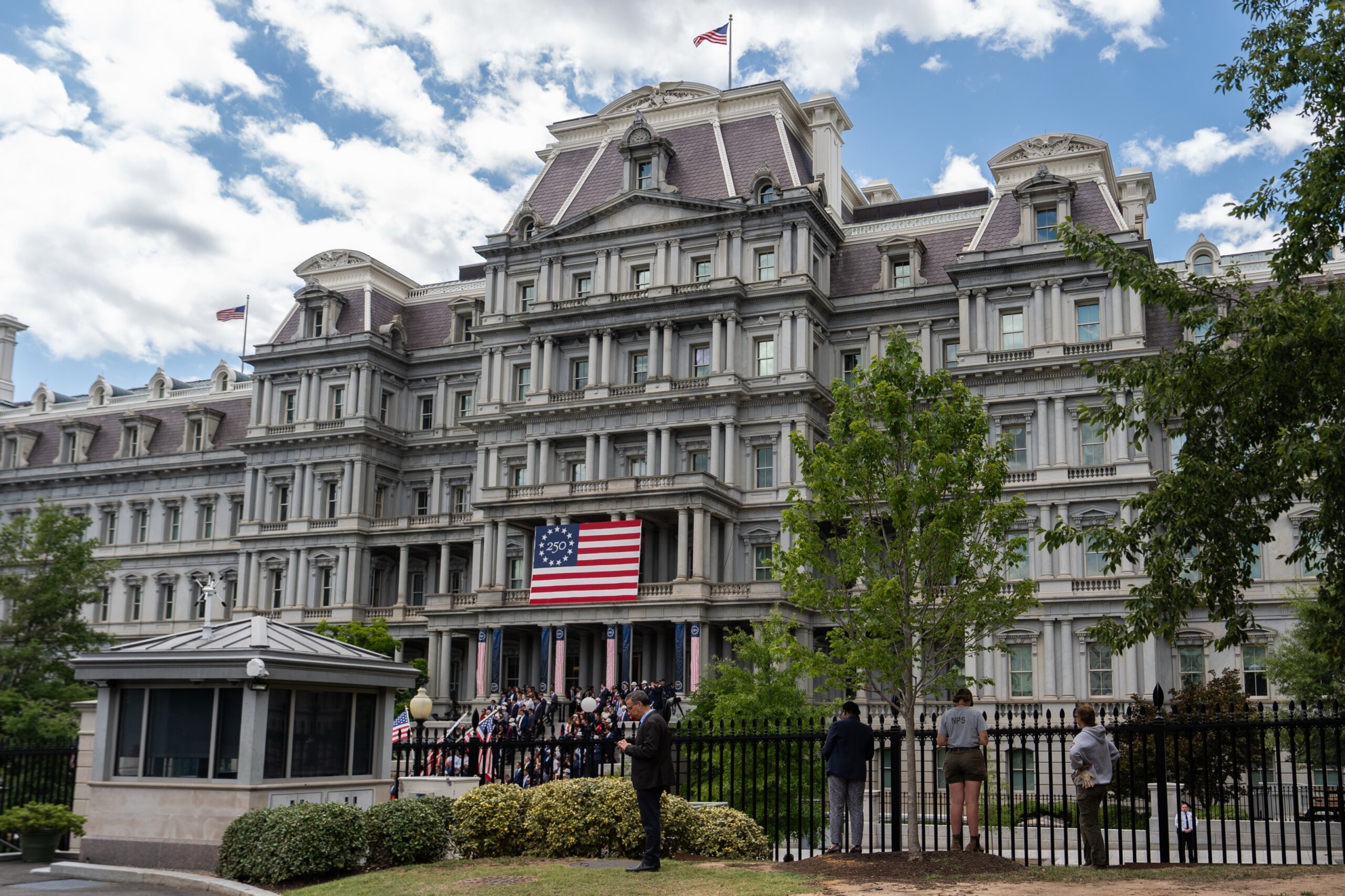
A federal district judge has approved paint tests on a historic landmark building near the White House, allowing President Donald Trump's plan to repaint the Eisenhower Executive Office Building to move forward. The proposed paint job is part of Trump's efforts to enhance the appearance of the nation's capital and is estimated to cost $7.5 million. However, critics, including preservationists and historians, have raised concerns about painting the granite building, arguing that it could damage the stone by trapping moisture.
U.S. District Judge Dabney L. Friedrich ruled that the plaintiffs in the case had not demonstrated that the planned tests would cause irreparable harm to the building. The tests will involve a small area of the exterior and panels not visible to the public. Friedrich emphasized that she would intervene if the administration exceeded the scope of the testing. The plaintiffs, represented by cultural preservationist groups, had sought to halt the testing and preparatory work.
While the decision disappointed the challengers of the painting plan, their main concern remains the delegation of authority for the project from the General Services Administration to the Executive Office. The plaintiffs argue that this transfer of power could set a dangerous precedent for historic properties nationwide. The judge requested regular status reports on the testing and ordered the parties to provide updates.
The ruling allows the Trump administration to proceed with the paint tests on the Eisenhower Executive Office Building, a move that has sparked controversy among preservationists and historians. The outcome of this case could have broader implications for the management of historic properties and the balance of power between government agencies. The judge's decision to monitor the testing closely indicates a willingness to intervene if necessary to protect the building's integrity and historical significance.