China's Zhuque-3 Rocket Makes History with Successful First-Stage Recovery
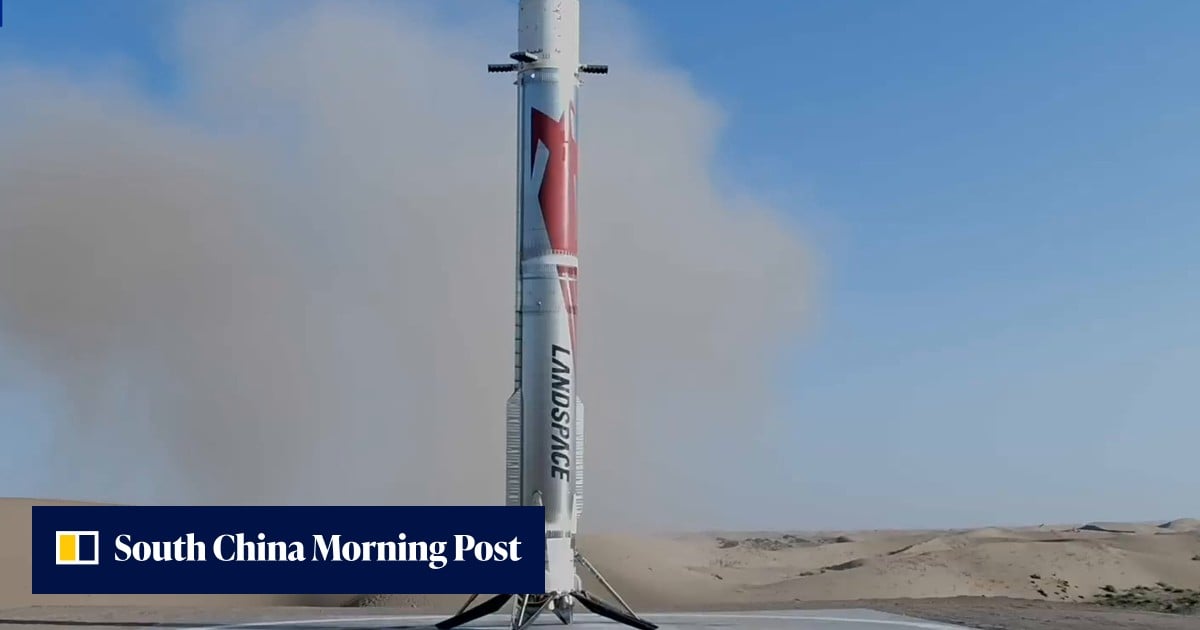
China's Zhuque-3 rocket recently achieved a significant milestone by successfully recovering its first stage after reaching orbit. This accomplishment marks the country's first commercial rocket to achieve both orbital insertion and first-stage recovery. The rocket, measuring 66 meters in length and powered by liquid methane and oxygen, launched from the Jiuquan Satellite Launch Centre in the Gobi Desert. It carried a Honghu-3 internet satellite into its designated orbit before its first stage returned to Earth and landed vertically at a recovery site in Gansu province.
The Zhuque-3 rocket's successful mission follows a previous attempt in which the first stage recovery failed due to the engine not reigniting at the required altitude. Despite this setback, the recent achievement solidifies China's position in the commercial space industry. The rocket's capabilities are comparable to SpaceX's Falcon 9, with similar payload capacities in both expendable and recoverable configurations.
With the successful recovery of its first stage, Zhuque-3 demonstrates China's progress in developing reusable rocket technology. This advancement aligns with global trends in the space industry, where companies like SpaceX are pioneering reusable launch systems. The recovery of the first stage not only reduces costs but also enhances the sustainability of space missions. China's continued efforts in this area position the country as a key player in the evolving landscape of commercial space exploration.