Negotiating Peace: The Road Map for Gaza's Future
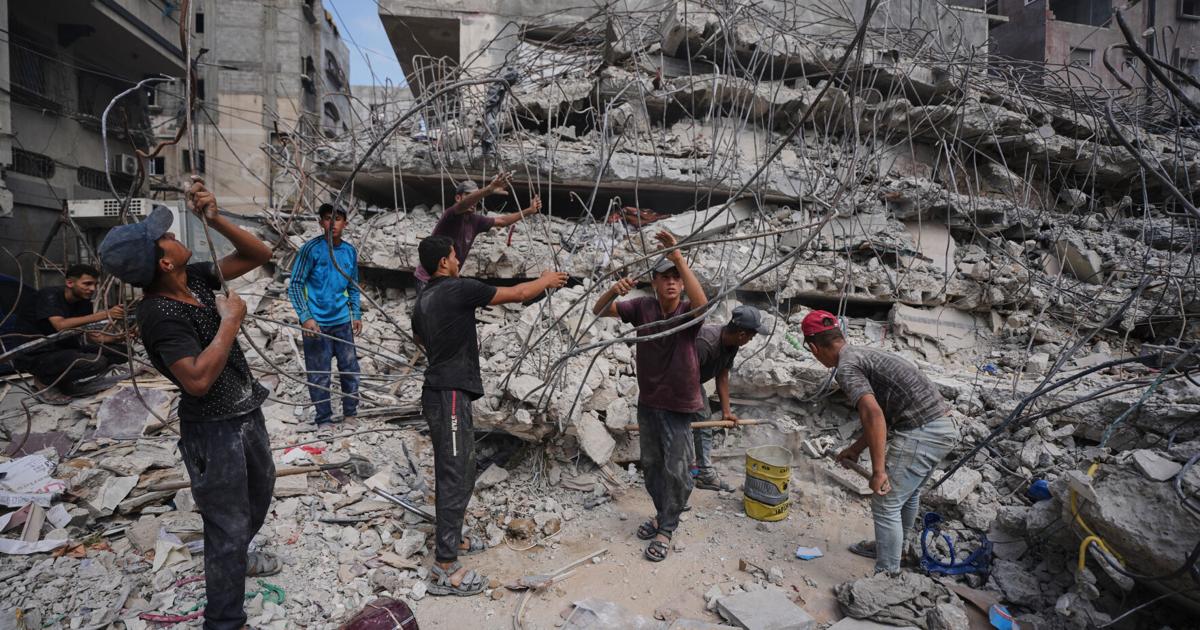
In Gaza City, Palestinians are salvaging iron from the debris of buildings destroyed by Israeli airstrikes during the conflict with Hamas. They are repurposing the iron for construction, making tents, or selling it for reuse. The situation in Gaza remains tense as negotiations continue between key players in the region.
Jared Kushner, a prominent figure in Middle East negotiations and son-in-law of former U.S. President Trump, recently met with Israeli Prime Minister Benjamin Netanyahu to discuss the U.S.-backed road map for a ceasefire deal in Gaza. The road map aims to address the ongoing conflict and reconstruction efforts in the war-torn enclave, with significant implications for the lives of Palestinians in Gaza.
Hamas, the militant group in control of Gaza, has expressed willingness to adhere to the road map, which includes disarmament. However, Israel insists on full disarmament by Hamas before any withdrawal of Israeli forces from the strip. The situation is complex, with various stakeholders involved in the negotiations and differing views on the path to peace.
Former British Prime Minister Tony Blair and Board of Peace Director Nickolay Mladenov were also present in the discussions with Netanyahu, highlighting the international interest in resolving the conflict. The road map's implementation hinges on the cooperation of all parties involved, including Israel, Hamas, and mediators from Egypt, Qatar, and Turkey.
Efforts to implement the road map face challenges, as Israel's control over parts of Gaza remains a contentious issue. The yellow line, a symbolic boundary dividing the territory, has been a point of contention, with Israeli forces extending their control beyond it. The road map's success depends on clear delineation of boundaries and mutual agreement on disarmament and reconstruction efforts.
Regional powers, including Saudi Arabia and the United Arab Emirates, have condemned Israel's rejection of the road map, calling for immediate action to advance the peace process in Gaza. The international community's support is crucial in facilitating dialogue and ensuring progress towards a lasting ceasefire and reconstruction in the region.
As negotiations continue and the anniversary of the conflict's outbreak approaches, residents of Gaza remain cautious about the prospects for peace. The road map's provisions for disarmament and statehood present complex challenges that must be addressed through dialogue and cooperation among all parties involved. The path to lasting peace in Gaza requires sustained efforts and commitment from all stakeholders.
In conclusion, the ongoing negotiations between Israel, Hamas, and international mediators highlight the complexities of the conflict in Gaza. The road map for a ceasefire deal and reconstruction efforts presents a potential pathway towards peace, but challenges remain in reaching a comprehensive agreement that addresses the needs and concerns of all parties involved. Continued dialogue and cooperation are essential in moving towards a sustainable resolution to the conflict in Gaza.