Strait of Hormuz Tensions: U.S. and Iran Clash Over Control
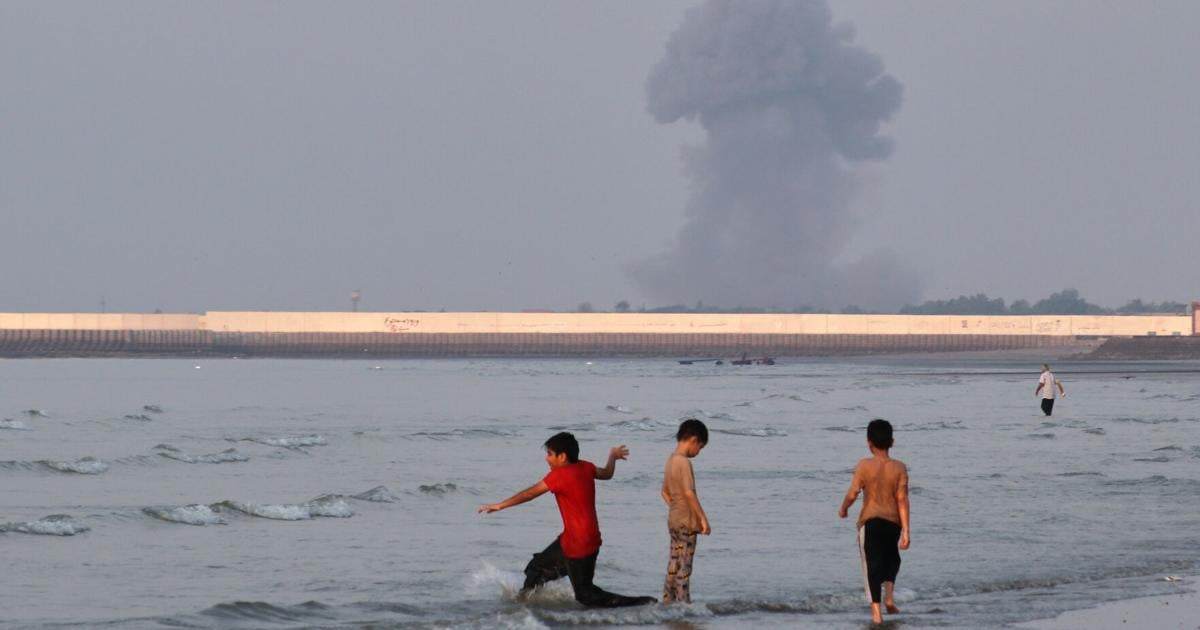
Three boys are seen playing in the shallow waters of the Strait of Hormuz, with a plume of smoke rising from an explosion in the background. The United States and Iran have both claimed control over the Strait of Hormuz following a series of attacks in the Middle East. The latest incident involved an Iranian attack on a container ship in the strait, leading to heightened tensions between the two countries. Iran asserts its right to manage traffic in the strait, while the U.S. disputes this claim, citing international law on freedom of navigation.
U.S. President Donald Trump stated that the U.S. is taking over the strait, following an 11-hour meeting with Iranian negotiators. However, disagreements arose over the terms of the agreement, leading to further uncertainty in the region. The ongoing conflict has raised concerns about a potential return to all-out war and its impact on the global economy. Oil prices surged before stabilizing, reflecting the volatility in the region.
The U.S. military conducted strikes on multiple sites in response to the attacks, targeting air defense systems, radar sites, and other military assets. The European Union called for the strait to remain open, emphasizing the importance of freedom of navigation. In contrast, Iran's Revolutionary Guard rejected U.S. interference in the strait, asserting its control over the region. Missile alerts were reported in Bahrain and Kuwait, with no immediate reports of casualties.
Iran reported attacks in several provinces, resulting in casualties and damage. The conflict escalated with unclaimed attacks on Iran, raising concerns about further retaliation. The situation worsened as a base belonging to an Iranian Kurdish opposition group in Iraq was targeted in a drone attack. The conflict continues to unfold, with both sides engaging in military actions and diplomatic efforts to resolve the crisis.
In conclusion, the tensions between the U.S. and Iran over the control of the Strait of Hormuz have escalated, leading to a series of attacks and counterattacks in the region. The impact of the conflict on global oil prices and security remains a significant concern, as both sides navigate the delicate balance between military action and diplomatic negotiations. The future of the strait and the broader Middle East region hangs in the balance as the conflict unfolds.