Transforming Deserts: The Success of the 'Straw Checkerboards' Technique in Combatting Desertification
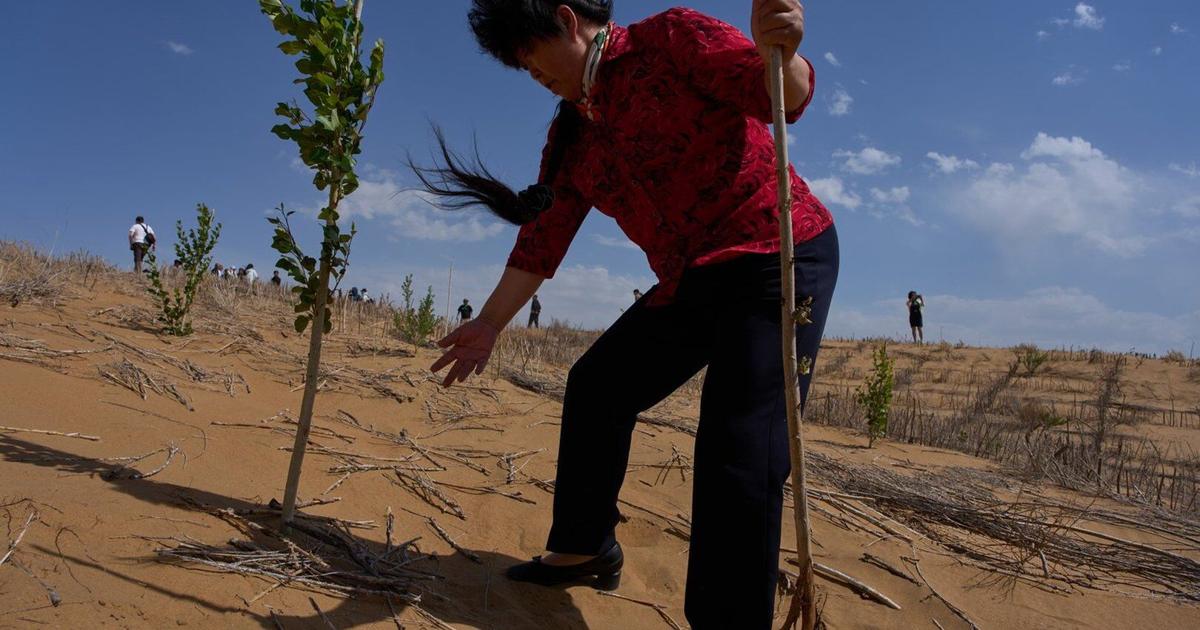
In the vast expanse of the Kubuqi Desert in China, a remarkable effort has been underway for the past fifty years. Workers have been diligently implementing a technique called "straw checkerboards" to combat desertification. This method involves inserting sticks into the sand to create a grid pattern, where saplings are then planted at the center of each square. This process helps stabilize sand dunes and facilitates plant growth by providing water through an irrigation system.
The "straw checkerboards" technique has proven to be a simple yet effective way to address desertification in the northern regions of China. By strategically placing sticks in the sand and planting trees in designated areas, the desert landscape is transformed into a more sustainable environment. This method not only helps prevent sand dunes from shifting but also encourages plant growth and biodiversity in the desert ecosystem.
Millions of workers have been involved in the implementation of the "straw checkerboards" technique across the deserts of northern China. Their dedication and hard work have contributed to the success of this desert control initiative. By following a systematic approach of creating grids and planting saplings, these workers have played a crucial role in combating desertification and promoting ecological restoration in the region.
The ongoing efforts to combat desertification in the Kubuqi Desert are a testament to the importance of sustainable land management practices. Through the use of innovative techniques like "straw checkerboards," significant progress has been made in transforming barren desert landscapes into thriving ecosystems. By working together to protect and restore the environment, we can create a more sustainable future for generations to come.