The Legal Fallout: Dismissal of Proud Boys' Capitol Riot Charges and Trump's Pardons
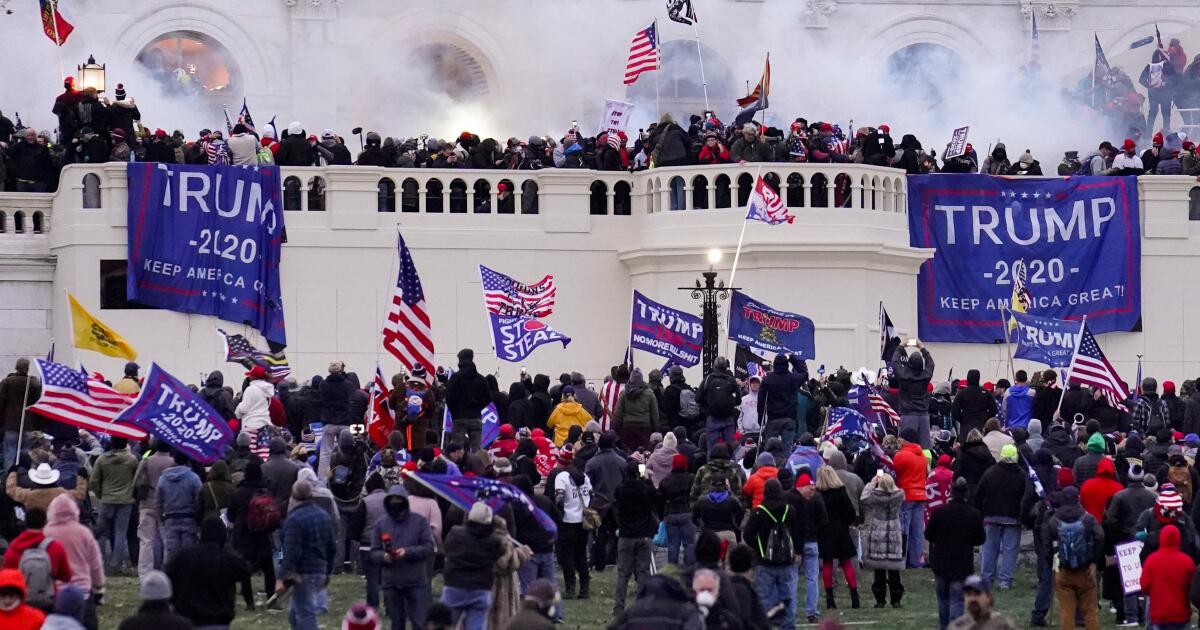
A federal judge has dismissed the remaining charges against members of the far-right Proud Boys group who were convicted of seditious conspiracy for planning to attack the Capitol in an attempt to keep President Trump in office after losing the election over five years ago. The case was dropped following Trump's pardon of all cases related to the Capitol riot in 2021. Judge Timothy Kelly, appointed by Trump, noted the government's decision to abandon the case in light of Trump's clemency actions.
The judge emphasized that his ruling should not be seen as an endorsement of the Justice Department's choice to drop the case, highlighting the seriousness of the Capitol riot as an attack on the peaceful transfer of power between presidents. Kelly stressed the importance of upholding the constitutional framework for the nation's self-government to endure for another 250 years, urging unity among Americans to protect and defend the democratic process.
Leaders of the Proud Boys and the Oath Keepers, another extremist group, were separately convicted of violent schemes to maintain Trump in power after his electoral defeat to Joe Biden. While the Proud Boys members had their convictions dismissed, a decision is pending on the Justice Department's request to overturn the Oath Keepers' seditious conspiracy convictions. The ruling affected four of the five Proud Boys members convicted in a jury trial, with their prison sentences commuted by Trump but not covered by his mass pardons.
Former Proud Boys chairman Enrique Tarrio, also convicted in the same trial, received a pardon from Trump after being sentenced to 22 years, the longest prison term in any Capitol riot case. The judge's decision reflects the complex legal aftermath of the Capitol riot and the implications of presidential clemency on criminal cases related to the event.
In conclusion, the dismissal of the Proud Boys' seditious conspiracy convictions underscores the ongoing legal repercussions of the Capitol riot and the impact of Trump's pardons on the prosecution of individuals involved in the attack. The judge's ruling raises questions about the balance between accountability for violent acts and the exercise of executive clemency in cases linked to the assault on the Capitol.