Escalating Tensions in the Persian Gulf: Trump's Warning to Iran and the Impact on Global Energy Supplies
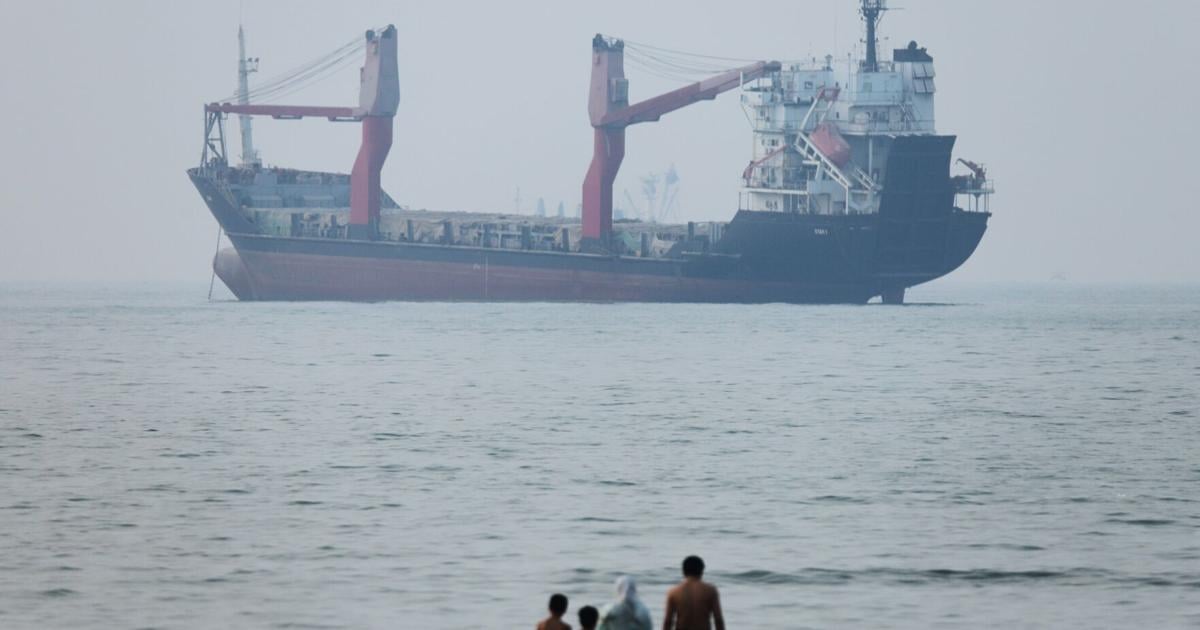
A group of individuals is seen standing in the shallow waters near Bandar Abbas, Iran, as a cargo ship is anchored in the Strait of Hormuz. President Donald Trump issued a warning to Iran, stating that the U.S. was preparing for further strikes following Iranian attacks on American military sites in the Persian Gulf. Trump threatened to target Iran's civilian infrastructure, including electric and desalinization plants, and to seize Kharg Island, which houses most of Iran's oil facilities. He mentioned the possibility of launching additional strikes in retaliation for Iranian actions in the Strait of Hormuz.
Trump's comments were made during a NATO summit in Ankara, Turkey, where he criticized Iran's behavior, accusing the country of launching drones and missiles at ships. The recent exchange of fire has raised concerns about the potential reignition of the conflict in Iran, leading to uncertainty in the region. Trump indicated that the ceasefire was over, but left room for negotiations to continue. The situation has caused fluctuations in oil prices, with the possibility of a renewed conflict impacting global energy supplies.
The U.S. military conducted strikes on Iranian targets, including air-defense systems and small boats used by Iran's Revolutionary Guard. These actions were in response to Iranian attacks on commercial shipping in the Strait of Hormuz. The strategic importance of the strait, through which a significant portion of the world's oil and natural gas passes, has been a focal point in the conflict. Rising energy prices have put pressure on both sides to reach a resolution, with negotiations expected to address key issues such as reopening the strait and addressing Iran's nuclear program.
The funeral ceremonies for Iran's Supreme Leader Ayatollah Ali Khamenei, who was killed in the early stages of the war, were intended to be a period of lower tensions. However, the recent escalation of hostilities has cast doubt on the prospects for a peaceful resolution. The U.S. and Iran remain at odds over key issues, with the potential for further military confrontations looming. The situation in the region remains fluid, with the international community closely monitoring developments.
In conclusion, the ongoing tensions between the U.S. and Iran have escalated following recent military actions in the Persian Gulf. The threat of renewed conflict and the impact on global energy supplies have raised concerns about the stability of the region. The need for diplomatic efforts to de-escalate the situation and prevent further hostilities is paramount. The international community plays a crucial role in promoting dialogue and finding a peaceful resolution to the conflict in Iran.