Controversy Over Slavery Exhibit at President's House: Legal Battle Unfolds on Independence Mall
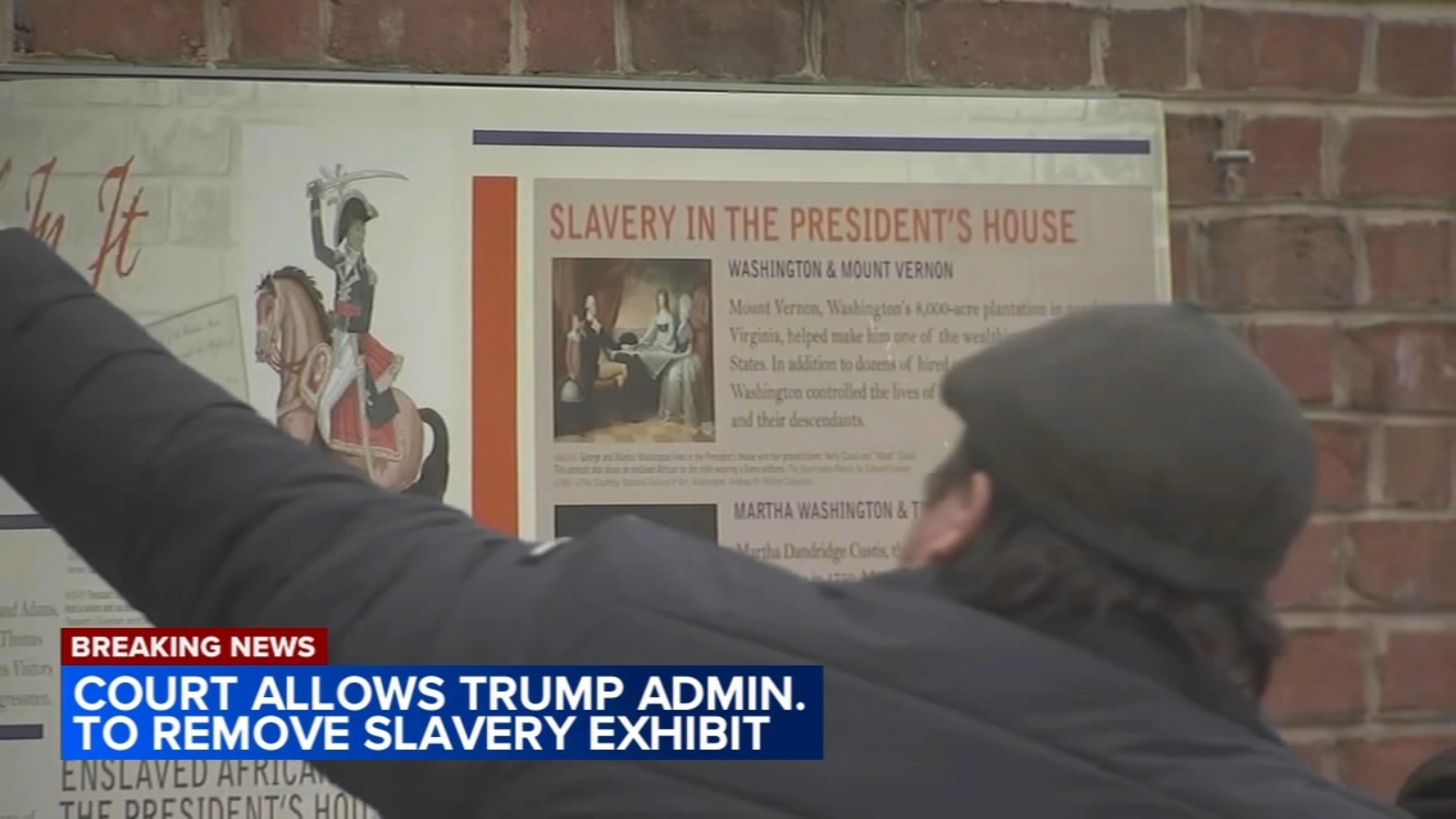
The federal government has been granted permission by a federal appeals court to replace the slavery exhibit at the President's House on Philadelphia's Independence Mall. The court ruled in June that the Trump administration has the authority to make changes to the exhibits at the site. The Trump administration's motion seeking approval for the immediate replacement of the slavery exhibit was granted by the appeals court on Friday morning. The City of Philadelphia has appealed the decision, arguing that the court made an error in granting the federal government's motion without giving the city enough time to respond.
The exhibit at the President's House site tells the stories of nine enslaved individuals who lived at the nation's first executive mansion during President George Washington's time. The city and advocacy groups have been advocating to keep the exhibit, accusing the Trump administration of distorting and censoring history. Earlier this year, the city filed a lawsuit claiming that the administration did not have the authority to remove panels from the historic site. Initially, a district court judge ruled in favor of the city, but the appeals court overturned that decision, stating that the President's House is under the jurisdiction of the National Park Service, not the city.
The ongoing legal battle over the slavery exhibit at the President's House on Independence Mall in Philadelphia continues to unfold. The federal appeals court's decision to allow the Trump administration to replace the exhibit has sparked controversy and opposition from the city and advocacy groups. The dispute centers on the interpretation and presentation of history at the historic site, with the city arguing for the preservation of the exhibit that highlights the stories of enslaved individuals who lived at the President's House. As the legal proceedings progress, the fate of the slavery exhibit remains uncertain, and the debate over historical representation and preservation continues.