Unveiling the Fluffy Giants: The Lightest Planets in the Universe
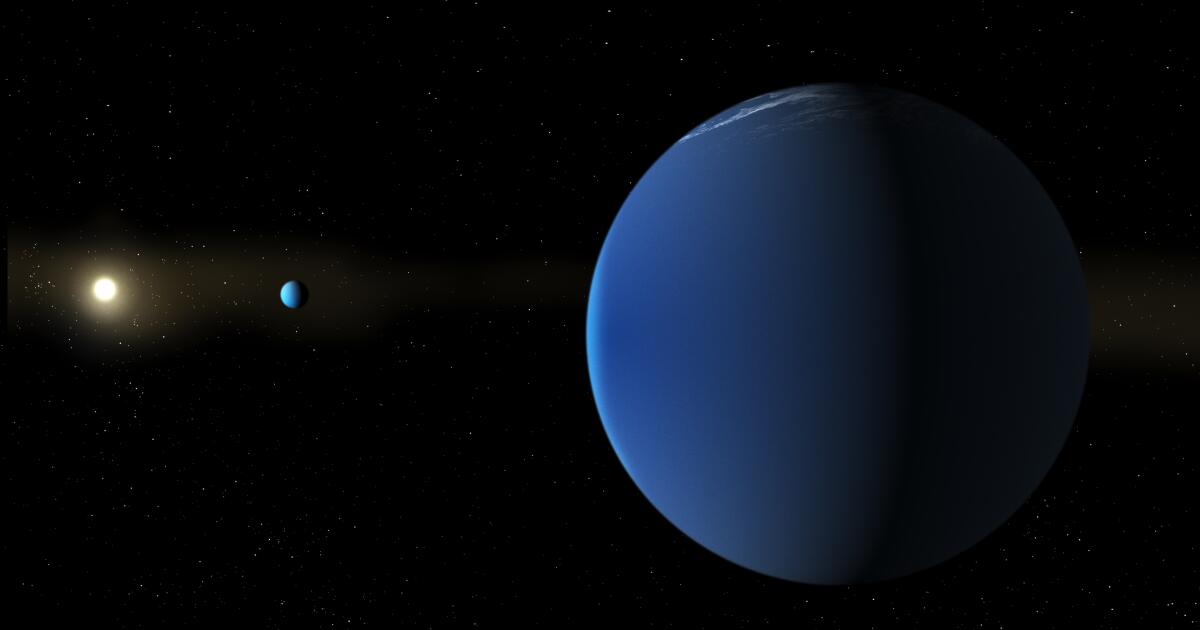
Astronomers have recently discovered a pair of massive planets that are incredibly light, with densities lower than cotton candy. These super-puffs, similar in size to Jupiter, are orbiting a star located 1,110 light-years away. The University of Oxford's George Dransfield described them as the lightest planets of their size, with densities comparable to shaving foam. The planets are believed to be mostly composed of hydrogen and helium, and further observations are needed to confirm their chemical composition.
These two fluffy planets, detected by NASA's Tess satellite, are located in the southern constellation Volans, also known as the flying fish. Researchers used telescopes on Earth to study their orbits and determine their density from a distance of 1,110 light-years. In comparison, Jupiter is significantly denser than these lightweight planets, being up to 35 times denser.
Super-puffs like these are considered rare in the universe and are believed to form in the gas and dust disk surrounding a young star, where there is an abundance of gas. Over time, they shed much of their material, becoming even lighter. Out of nearly 6,300 confirmed exoplanets, fewer than 40 are classified as super-puffs. By studying these unique planetary systems, researchers hope to gain insights into planet formation and our place in the cosmos.
In conclusion, the discovery of these super-puffs adds to our understanding of the diversity of planets beyond our solar system and provides valuable information about the processes involved in planet formation. Further research and observations will continue to expand our knowledge of the universe and our place within it.