Syria vs. Hezbollah: Trump's Unconventional Proposal and the Middle East's Response
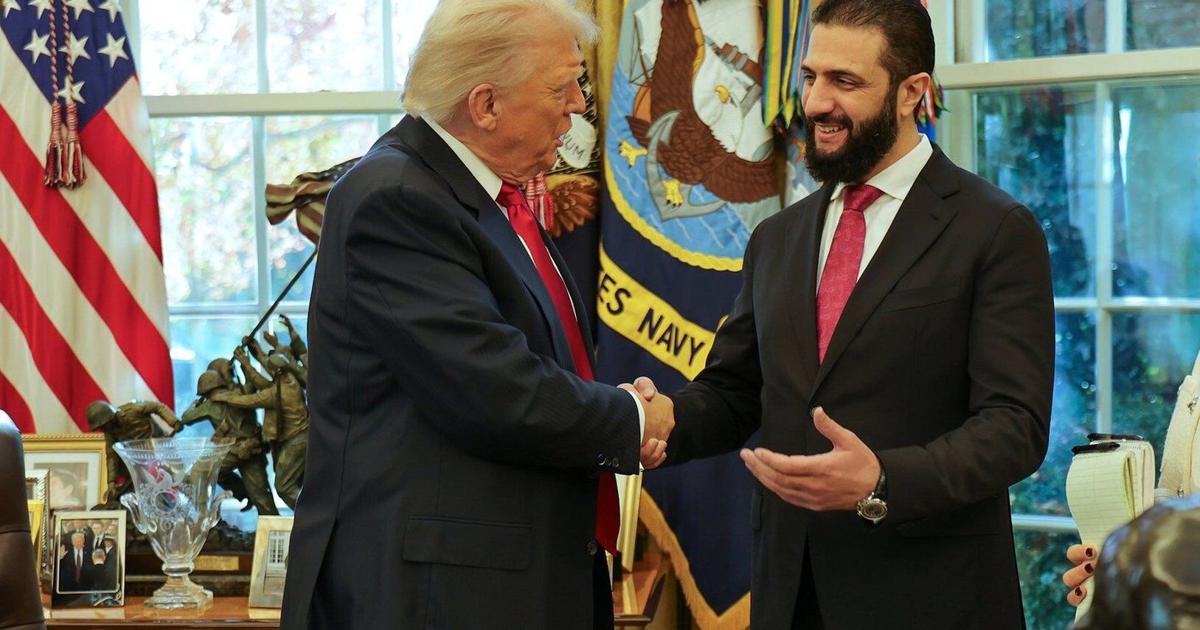
The recent shift in the White House's stance on Israel's conflict with Hezbollah in Lebanon has raised eyebrows in the region. President Donald Trump has proposed an unconventional solution: allowing Syria to take on the Iran-backed militant group instead. Trump believes that Syria's battle-hardened insurgents, who ousted President Bashar Assad and established a new government, are better equipped to combat Hezbollah than the Israeli military. This unexpected suggestion has sparked debate and speculation in the Middle East.
The idea of Syria, a country torn by civil war and political turmoil, taking on Hezbollah, a powerful militant group, has generated mixed reactions. While some view it as a strategic move that could weaken Hezbollah's influence in the region, others are skeptical of Syria's ability to effectively confront the group. The proposal has added a new dimension to the complex dynamics of the Middle East, raising questions about the potential consequences of such a shift in strategy.
President Trump's proposal has underscored the evolving geopolitical landscape in the Middle East and the shifting alliances in the region. By suggesting that Syria should confront Hezbollah, Trump has introduced a controversial and unorthodox approach to addressing the conflict in Lebanon. The idea has sparked discussions about the implications of such a move and the potential impact it could have on regional stability.
In conclusion, President Trump's proposal to let Syria fight Hezbollah instead of Israel has sparked debate and speculation in the Middle East. The suggestion has raised questions about the feasibility and consequences of such a strategy, highlighting the complexities of the region's political dynamics. As the situation continues to evolve, it remains to be seen how this proposal will shape the future of the conflict in Lebanon and the broader geopolitical landscape of the Middle East.