Unveiling the Mysteries of NASA's Super-Puff Planets: TOI-791 b and TOI-791 c
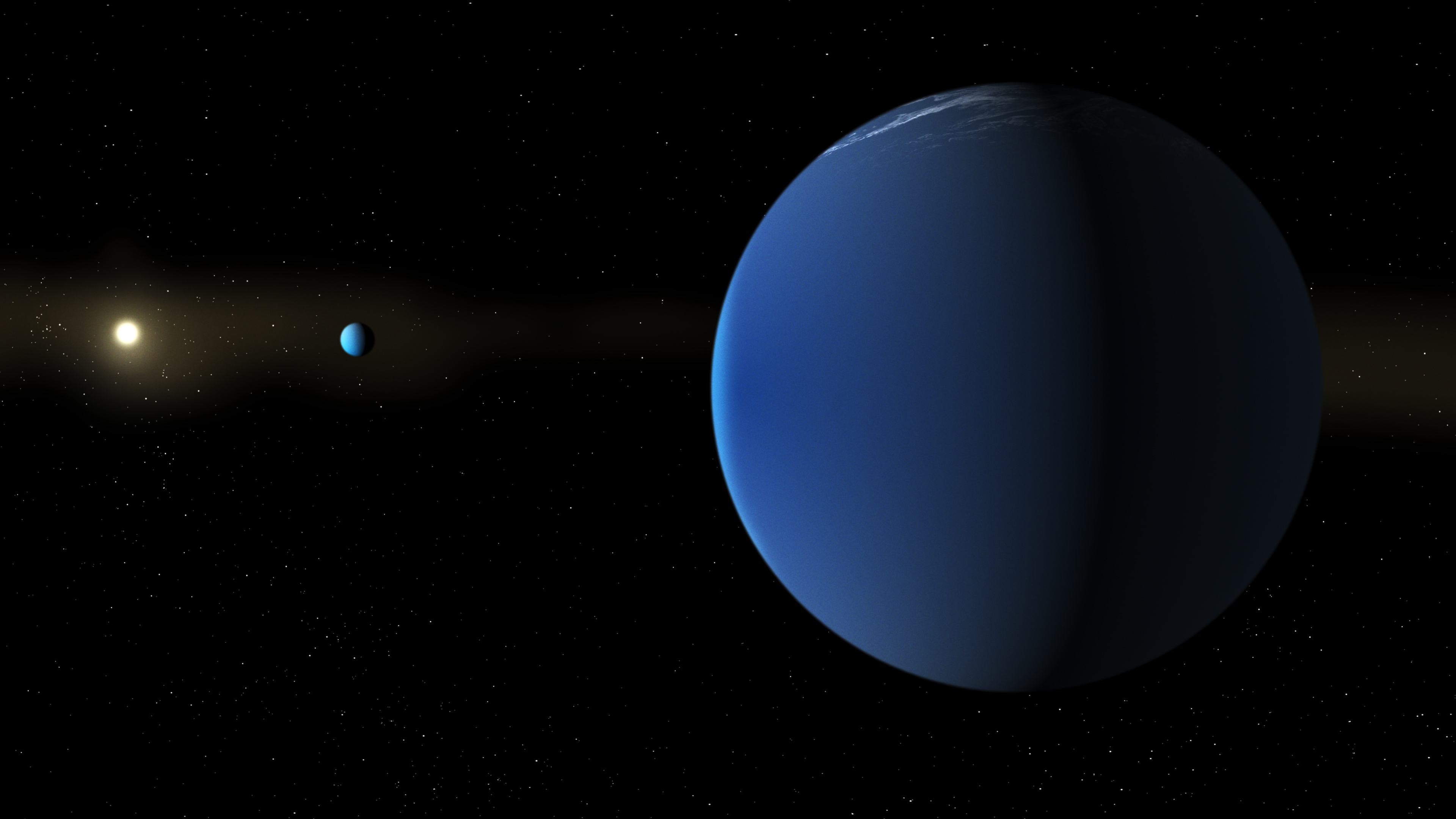
NASA's TESS mission has discovered two new "super-puff" planets, TOI-791 b and TOI-791 c, which are giant planets with extremely low densities similar to cotton candy. These Jupiter-sized planets orbit a Sun-like star called TOI-791 located 1,113 light years away from Earth. The discovery was made by observing repeated dips in the brightness of TOI-791, indicating that planets were passing in front of the star.
TOI-791 b and TOI-791 c are unique due to their low mass compared to their size, with TOI-791 b having only 3.0 percent of Jupiter's mass and TOI-791 c containing just 5.9 percent of Jupiter's mass. These super-puffs also have long orbital periods, with TOI-791 b taking 139 days and TOI-791 c taking 232 days to complete an orbit around their host star. The planets' gravitational interaction with each other affects the timing of their transits across the star.
The discovery of these super-puff planets presents a puzzle for scientists to understand how such giant planets with low densities form. Further research aims to explore the chemical composition of their atmospheres, the impact of their spin on their shape, and the relationship between their host star's tilt and their orbits. Studying these planets could provide valuable insights into planetary system formation and evolution.
The study, led by the University of Oxford in collaboration with other institutions, was published in the Monthly Notices of the Royal Astronomical Society. The rarity of these super-puff planets and their unique characteristics make them intriguing targets for scientific investigation and could shed light on the mysteries of planetary evolution.