Exploring the Galactic Bulge: Euclid's Stunning Image of the Milky Way's Center
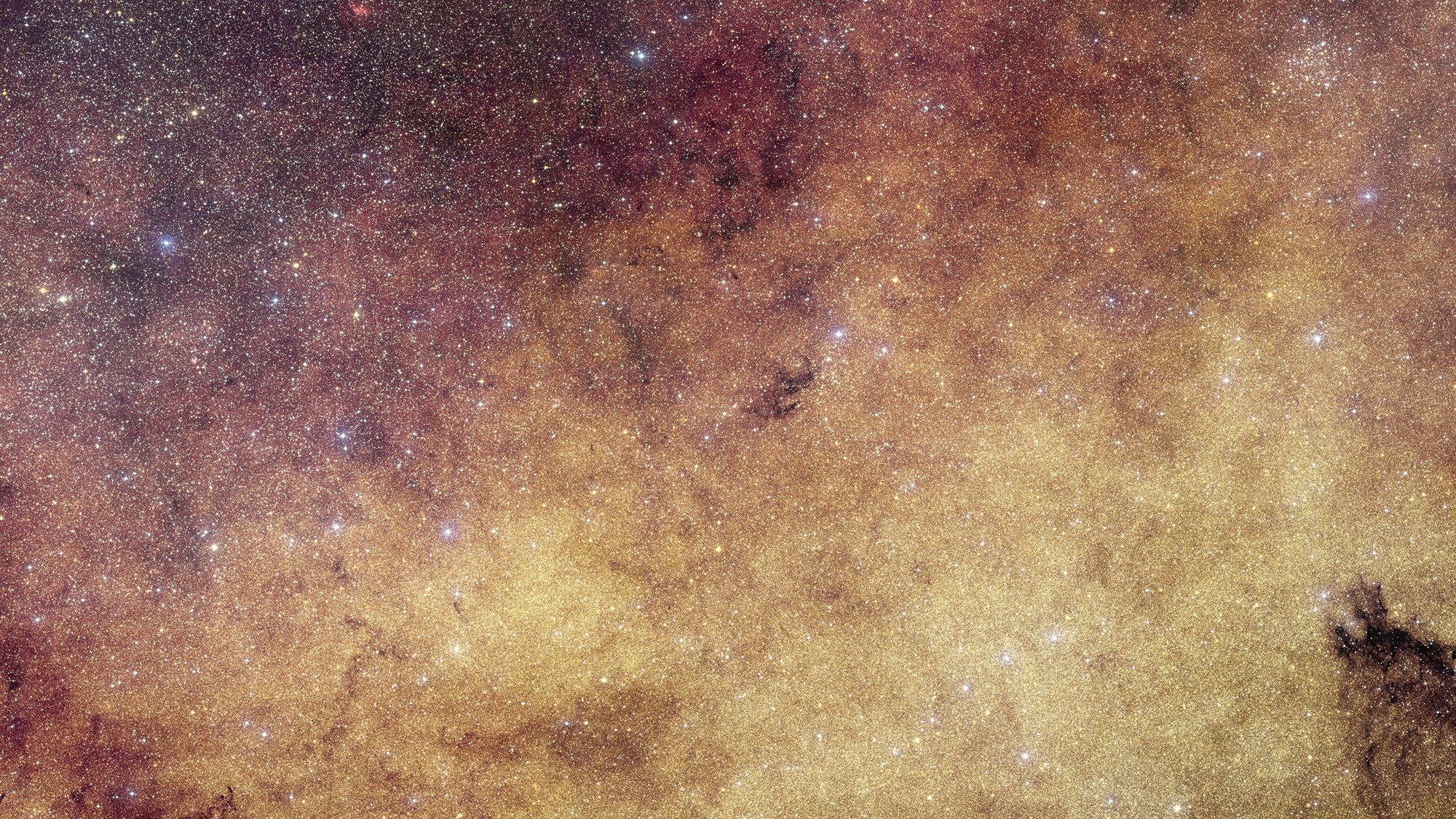
A cutting-edge space telescope, Euclid, has recently captured a detailed image of the center of the Milky Way galaxy, showcasing over 60 million stars densely packed in this region. The European Space Agency's spacecraft took this remarkable image in March 2025, using its visible-light camera to observe the galactic bulge, or the center of the galaxy. The high sensitivity of Euclid's camera allows it to distinguish individual stars in the crowded galactic bulge without being overwhelmed by the brightness.
This mosaic image of the Milky Way's center will play a crucial role in confirming newly discovered exoplanets and measuring their masses as they orbit their parent stars. The data collected by Euclid will be particularly valuable for NASA's upcoming Nancy Grace Roman Telescope, which will use the microlensing technique to search for exoplanets. Microlensing occurs when a closer star passes in front of a more distant star, temporarily magnifying the light from the background star and potentially revealing unseen planets.
While Euclid's observing period was too short to capture a microlensing event, it has provided astronomers with valuable information about known exoplanets. The image includes 51 known planetary systems and will aid in the study of many more exoplanets that are yet to be discovered. By using Euclid's data as a reference point, astronomers can track the movement of individual stars over time, confirming the existence of planets and determining their masses.
Euclid's detailed image of the Milky Way's central bulge will serve as a valuable resource for future planet-hunting missions, such as the Roman Telescope. By combining data from multiple telescopes, astronomers can enhance their understanding of exoplanets and further explore the mysteries of our galaxy.