Unveiling the Ancient Origins of Interstellar Comet 3I/ATLAS: Insights from Advanced Telescopes
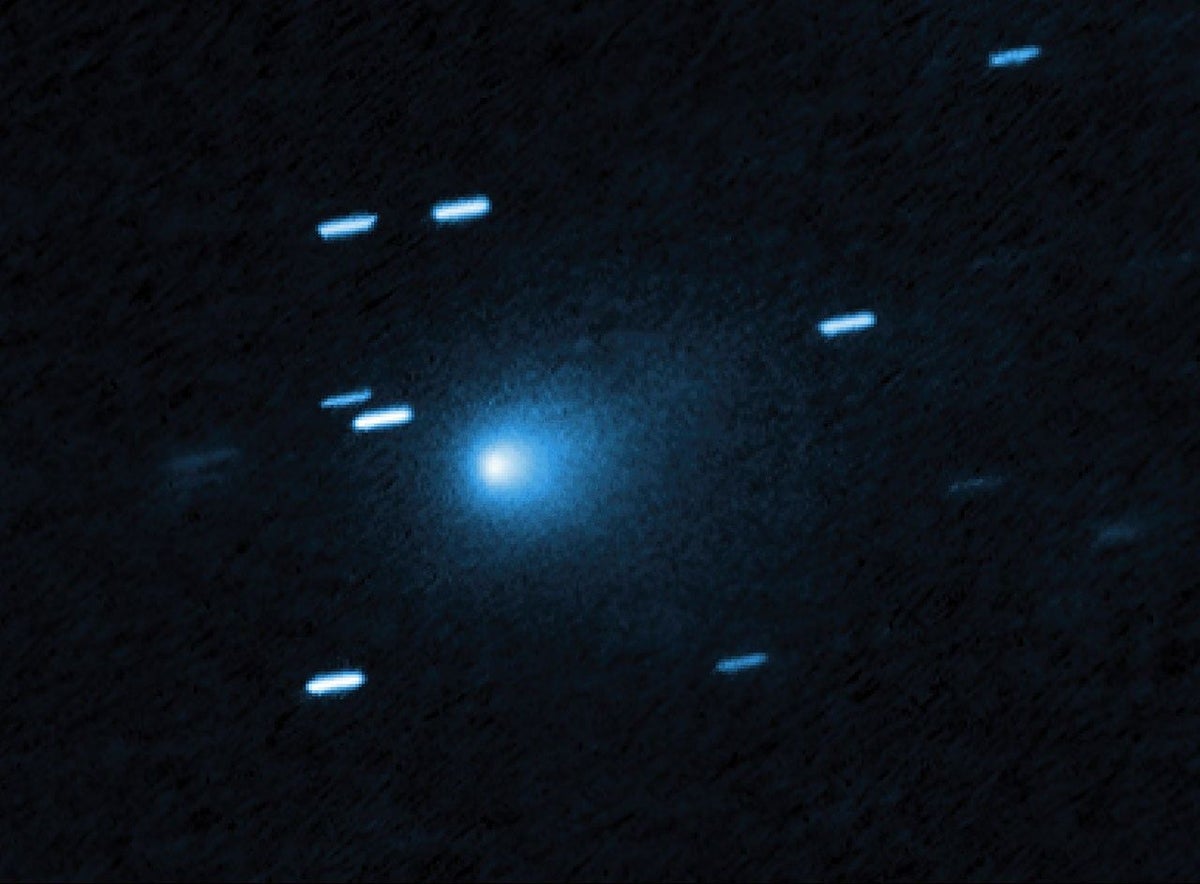
Interstellar Comet 3I/ATLAS has been found to be an ancient and unique visitor to our solar system, with origins dating back to the early days of the universe. Discovered in 2025, this comet is the third interstellar object identified passing through our solar system, following 1I/ʻOumuamua and 2I/Borisov. Recent studies using advanced telescopes like the James Webb Space Telescope (JWST) and the Atacama Large Millimeter/submillimeter Array (ALMA) have provided insights into the comet's composition and history, shedding light on its mysterious origins.
By analyzing the carbon isotopes in the comet, researchers have estimated that 3I/ATLAS could be as old as 12 billion years, making it significantly older than our solar system. The comet's composition also indicates that it originated from a colder region within its own solar system, containing higher levels of heavy hydrogen isotopes like deuterium. This discovery challenges previous assumptions about the nature of comets and suggests that our solar system may be an outlier compared to others in the universe.
The study of interstellar objects like 3I/ATLAS has been made possible by advanced telescopes like ALMA and JWST, with the Vera C. Rubin Observatory poised to make more discoveries in the coming years. Astronomers are eager to learn more about these cosmic wanderers and how they can provide insights into the outer reaches of the universe. The ongoing research on interstellar comets promises to reveal more about the diversity of celestial bodies and the mysteries of our cosmic origins.