The Legacy of the Major Oak: A Tribute to Sherwood Forest's Iconic Ancient Tree
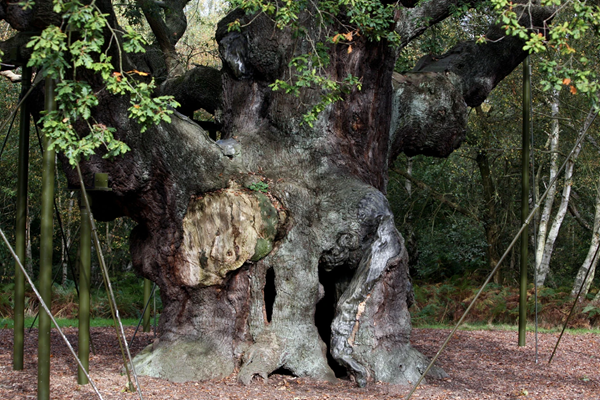
A famous ancient oak tree in Sherwood Forest, known as the Major Oak and linked to the legend of Robin Hood, has sadly passed away. The 1,200-year-old tree did not sprout leaves this spring, leading to its demise. Over the years, visitors to the forest had compacted the soil around the tree, making it difficult for rain to reach its roots, ultimately contributing to its death. Despite rumors of its demise in the past, this time the Royal Society for the Protection of Birds confirmed that the tree had indeed died.
The Major Oak, which is said to have sheltered Robin Hood during his escapades, had become a popular attraction for tourists over the centuries. The tree's fame grew after being mentioned in a book on oaks in 1790, drawing fans to the forest. While the exact cause of the tree's death remains unknown, factors such as soil compression from visitors, climate change, and interventions to support its limbs likely played a role. Experts found the tree's root system strangled and starved, leading to its decline.
Ancient trees like the Major Oak are crucial for the environment, but their decline often goes unnoticed. The loss of these trees has a significant impact on the ecosystem. Despite its passing, the Major Oak will remain a symbol of Sherwood Forest and the legend of Robin Hood. The tree has been protected by a fence since the 1970s and will continue to stand as a natural monument for visitors to admire, serving as a reminder of the forest's rich history and importance.
In conclusion, the death of the Major Oak marks the end of an era for Sherwood Forest. The tree's legacy as a symbol of folklore and history will live on, reminding us of the importance of preserving ancient trees and the natural world. Visitors can still come and pay their respects to the Major Oak, honoring its role in the forest's ecosystem and its connection to the legendary tales of Robin Hood.