The Digital Delusion: Advocating for Traditional Teaching Methods in Schools
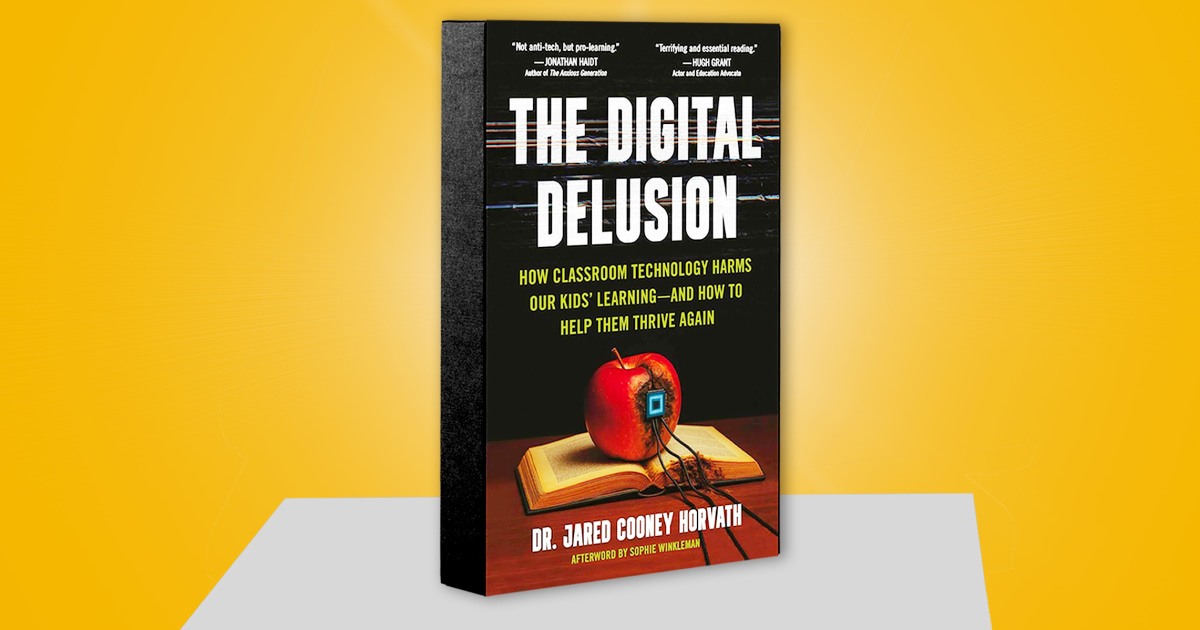
Parents are distributing copies of a self-published book titled "The Digital Delusion" at school board meetings to advocate for reducing technology use in schools. The author, Jared Cooney Horvath, argues that the decline in standardized test scores among American children is linked to schools providing laptops or tablets to every student. He emphasizes that students learn better through traditional methods like paper and discussion rather than screens. Horvath's book has gained significant attention, leading him to testify before the U.S. Senate and state legislatures, as well as receiving endorsements from prominent figures like actor Hugh Grant.
The book has become a central resource for parents and educators advocating for limits on education technology in schools. It provides a compelling argument supported by research and statistics that can be used to persuade school leaders and community members. By presenting a blend of educational and neuroscience expertise, Horvath's book has added credibility to the concerns raised by parents about excessive screen time in schools.
Administrators at Granville County Public Schools in North Carolina and parents in California have turned to "The Digital Delusion" for guidance on implementing tech-free initiatives in schools. However, the book has sparked debates and challenges among education leaders and tech proponents who question its claims. Some argue that the correlation between falling test scores and technology use is oversimplified and overlooks other factors like mental health.
Horvath challenges the prevailing narrative that education is broken and asserts that ed tech has actually hindered learning in American schools. He criticizes the push for personalized instruction through technology, suggesting that it is ineffective and costly. His book highlights research showing that excessive computer use in schools is associated with lower academic performance, advocating for a return to traditional teaching methods like textbooks and paper.
Drawing on his background in education and neuroscience, Horvath presents arguments in "The Digital Delusion" that align with findings from various think tanks and research centers. He emphasizes the benefits of reading paper books and writing by hand over screen-based activities, citing studies that support his claims. Despite facing criticism from some education experts, Horvath's book has resonated with parents and educators seeking to address the impact of technology on student learning.
As the conversation around screen time in schools gains momentum, Horvath's book has emerged as a pivotal resource for those advocating for a reduction in technology use. Its widespread impact has prompted discussions and policy considerations at various levels of education. While the book has sparked debates and challenges within the education community, its influence on the dialogue surrounding education technology is undeniable.