Foreign Influence in American AI Policy: The Singham Connection and CodePink's Role
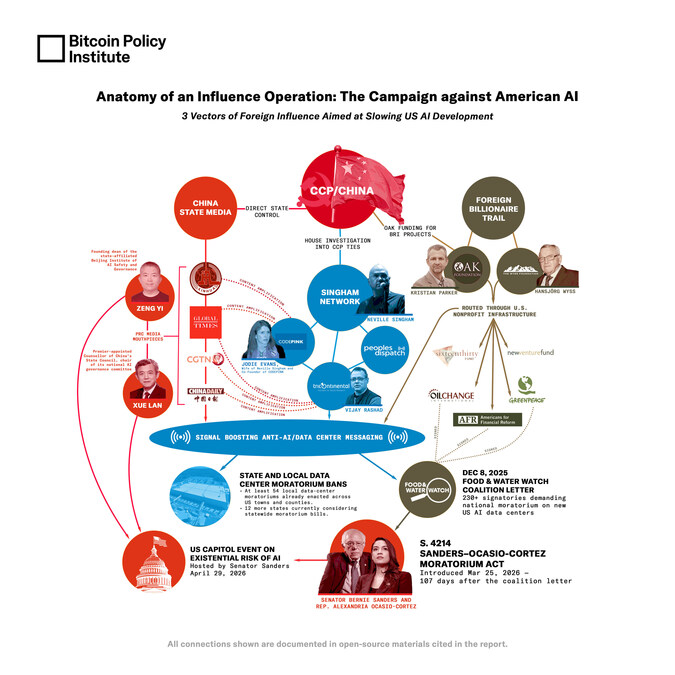
A far-left activist group, CodePink, released a video on Instagram criticizing a proposed data center project in Utah supported by investor Kevin O’Leary. A report by the Bitcoin Policy Institute reveals foreign influence in the campaign against American AI, pointing to a network funded by tech tycoon Neville Roy Singham, Chinese Communist Party state media, and dark money from foreign billionaires like Hansjörg Wyss and Alan Parker. Singham's nonprofits, including CodePink, have been opposing U.S. AI infrastructure and data center expansion in alignment with Chinese propaganda narratives and foreign-funded activist networks.
The Singham-funded organizations have acted as proxies for Chinese Communist Party propaganda, fueling opposition to U.S. technology firms and introducing legislation like the AI Data Center Moratorium Act. The report highlights the involvement of Chinese government affiliates in American AI policy discussions, raising concerns about foreign influence on AI safety and development. The report emphasizes the need for transparency in funding and influence in shaping AI policy debates.
The report alleges a coordinated campaign against American AI infrastructure conducted through foreign-funded organizations and Chinese state media outlets. Beijing's anti-data-center narratives in the U.S. contrast with its domestic AI infrastructure subsidies, revealing a strategic asymmetry. Singham's network has been producing content opposing U.S. AI infrastructure and export controls, with affiliated organizations like CodePink and Tricontinental publishing articles criticizing American AI projects and policies.
Investigations by congressional committees are underway to determine if Singham-funded nonprofits should register under the Foreign Agents Registration Act. The report also implicates charitable organizations linked to Wyss and Parker in funding advocacy against AI infrastructure projects. The efficiency of coordinated advocacy efforts, as seen in the timing of the Sanders-Ocasio-Cortez moratorium legislation, suggests a deliberate campaign against U.S. AI development. The report underscores the importance of safeguarding AI safety and empowering American workers without foreign influence.
In conclusion, the report presents the AI policy debate as a choice between American AI and Chinese AI, urging policymakers to prioritize American interests in AI development. The influence of foreign funding and propaganda on AI policy discussions underscores the need for transparency and vigilance in safeguarding American technological advancements. The CodePink video opposing the Utah data center project reflects the broader pro-China, pro-communist activist ecosystem's support for campaigns against American AI infrastructure.