Redefining Corporate Influence: Hawaii and Montana Lead the Charge for Transparent Campaign Financing
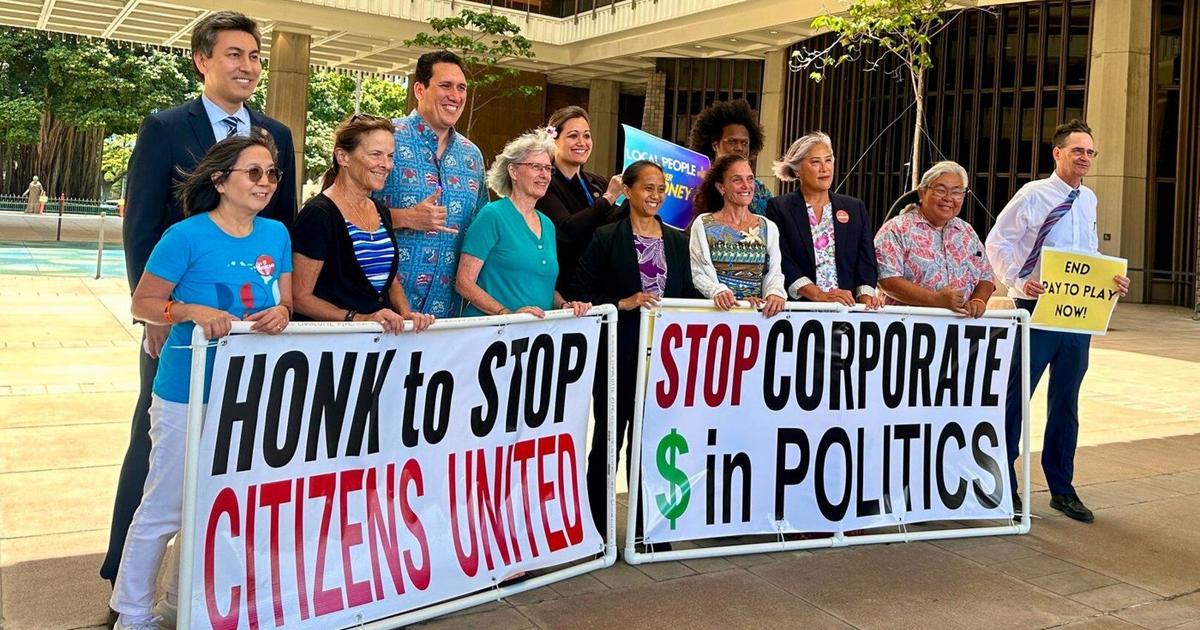
Lawmakers in Hawaii and activists are exploring new strategies to limit the impact of corporations and elusive "dark money" organizations that have been able to pour unlimited funds into political campaigns following the Supreme Court's 2010 Citizens United v. Federal Election Commission decision. In Hawaii, legislators have passed a bill that aims to redefine the role of corporations in election spending, while a volunteer group in Montana is working to gather support for a similar initiative on the upcoming ballot.
The proposed legislation in Hawaii seeks to establish clear boundaries for corporate involvement in political activities, aiming to curb the influence of corporate money in elections. By redefining the role of corporations, lawmakers hope to create a more transparent and equitable political landscape that prioritizes the voices of individual voters.
Meanwhile, in Montana, a grassroots effort is underway to gather signatures for a ballot initiative that mirrors the Hawaii bill's objectives. The volunteer group is mobilizing support from residents to address the issue of corporate influence in politics and advocate for greater accountability and transparency in campaign financing.
Both Hawaii and Montana are at the forefront of a potential shift in campaign finance regulations, with a focus on limiting the impact of corporate entities and dark money groups in elections. By redefining the role of corporations and advocating for greater transparency, these states are taking proactive steps to safeguard the integrity of the electoral process and promote a more democratic system.
In conclusion, the initiatives in Hawaii and Montana represent a significant effort to address the challenges posed by corporate influence and dark money in politics. By redefining the role of corporations and advocating for greater transparency in campaign financing, these states are working towards a more equitable and accountable electoral system that prioritizes the interests of individual voters.