Disrupting the Cocaine Highway: Europol's Successful Operation in the Atlantic Ocean
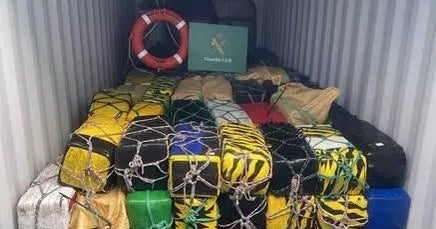
A recent operation targeting drug trafficking routes from Latin America to Europe in the Atlantic Ocean has successfully disrupted a major cocaine highway. Europol, the European Union's law enforcement agency, seized over 12 tons of cocaine and about 9.5 metric tons of hashish during the two-week operation. Eight vessels were intercepted, and 54 people were arrested in total.
The mission, coordinated by Europol, involved international law enforcement agencies focusing on detecting and intercepting vessels engaged in drug trafficking between Latin America and Europe. The operation concentrated on an area between Spain's Canary Islands and Portugal's Azores, where covert transfers were taking place at sea to avoid detection at major ports.
Europol's recent operation revealed that criminal networks are increasingly using fragmented maritime routes to move cocaine across the Atlantic. These piecemeal transfers reduce the risks for traffickers and make it harder for law enforcement to track the entire shipment. The agency's intelligence gathering during the operation provided insights into the evolving tactics of drug trafficking networks in the region known as the "cocaine highway."
According to Europol, the success of the operation has highlighted the need for law enforcement to adapt quickly to the changing strategies of criminal networks. By leveraging the new intelligence gathered, Europol aims to identify and dismantle the trans-Atlantic drug trafficking networks responsible for the illicit activities in the region.
In conclusion, Europol's recent operation targeting the cocaine highway in the Atlantic Ocean has dealt a significant blow to drug trafficking networks moving cocaine from Latin America to Europe. The agency's efforts to disrupt these routes and gather intelligence will help in dismantling the criminal networks behind these illicit operations.