Supreme Court Halts Nationwide Mailing of Abortion Pills: Legal Battle Over Reproductive Rights
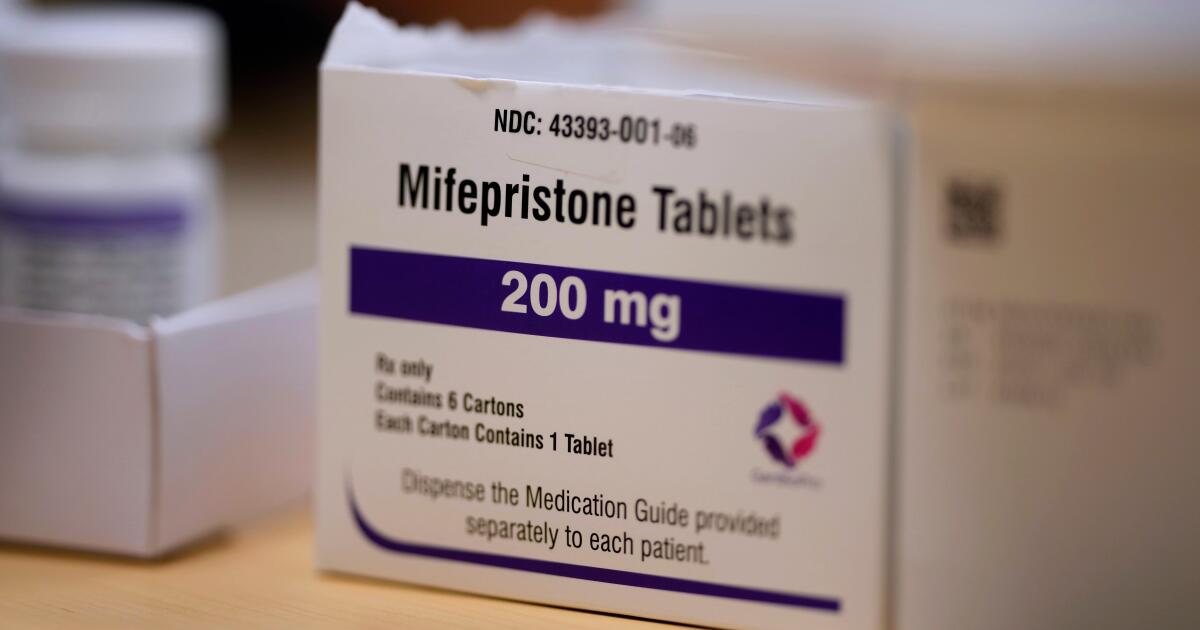
The Supreme Court has taken a significant step in considering challenges to medication commonly used for early pregnancy termination. The court has temporarily halted an appeals court ruling that would prevent the nationwide mailing of abortion pills until May 11. This move comes after Louisiana state lawyers argued that their state's ban on abortions is undermined if women can receive abortion pills through the mail after consulting a doctor online.
The conservative U.S. 5th Circuit Court of Appeals in New Orleans recently ruled that the claim against the federal regulation allowing doctors to prescribe medication without an in-person visit is likely to succeed. This ruling could potentially impact women in various states, including California, by making it illegal for them to obtain abortion pills without seeing a doctor first. The legal dispute may also put the Trump administration in a challenging position as the FDA reviews the safety of prescribing these pills without an in-person visit.
Two makers of mifepristone have filed emergency appeals to block the 5th Circuit's order, arguing that no federal court has ever rejected a long-standing FDA drug approval and restricted its distribution based on rejected claims. The court has requested a response from Louisiana by Thursday. If mifepristone becomes unavailable, women may resort to using misoprostol alone for abortion, according to abortion rights advocates.
The majority of abortions in the country are now carried out using medication, making the availability of these pills crucial for women's reproductive health care. The court's temporary order does not indicate its final decision, leaving the outcome of this legal battle uncertain. Both sides of the debate, including abortion rights advocates and opponents, continue to express their concerns about the safety and accessibility of these drugs, emphasizing the importance of science and medical guidance in the decision-making process.
In conclusion, the ongoing legal battle over the distribution of abortion pills highlights the complex and contentious nature of reproductive rights in the United States. The Supreme Court's temporary halt on the nationwide mailing of these pills underscores the significance of this issue and the potential impact on women's access to safe and effective reproductive health care. As the court continues to review the challenges to medication used for early pregnancy termination, the outcome of this case will have far-reaching implications for women's reproductive rights and access to essential healthcare services.