President Lai Ching-te's Resilience: Navigating China's Pressure and Taiwan's Global Engagement
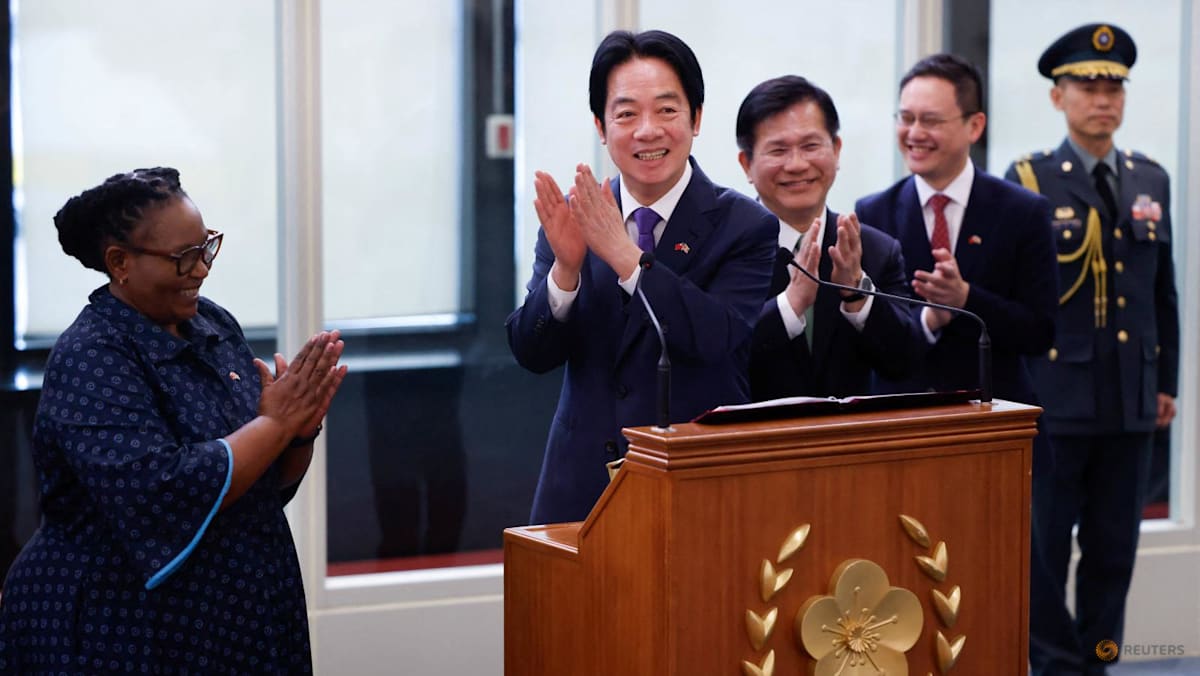
President Lai Ching-te returned to Taiwan from Eswatini, emphasizing Taiwan's resilience against pressure from China. He took a longer route over the Indian Ocean to avoid airspace controlled by China's allies. China considers Taiwan part of its territory and pressures countries to cut ties with Taiwan. Lai faced obstacles when three Indian Ocean states denied overflight permission for his aircraft. Despite this, he arrived in Eswatini, a country with formal diplomatic relations with Taiwan, on a trip that was not publicly announced in advance.
Lai's firm stance on Taiwan's global engagement was evident in his remarks upon returning to Taiwan. He emphasized Taiwan's place in the world and the rights of its people to connect with other nations. China, which had criticized Lai's visit to Eswatini, did not immediately respond to his return. Lai's aircraft took a detour over the Indian Ocean to avoid countries with close ties to Beijing before entering Taiwan airspace.
China's efforts to limit Taiwan's international presence have intensified, with Beijing labeling Lai a "separatist." Lai, however, rejects China's claims and asserts Taiwan's right to engage with the international community. The United States recognizes Taiwan as a trusted partner and commends Taipei's global relationships, including with Eswatini. Lai's recent trip to Africa follows his Pacific tour in late 2024, which included visits to Hawaii and Guam.
In conclusion, President Lai Ching-te's return from Eswatini underscores Taiwan's determination to maintain its global connections despite pressure from China. Taiwan's defiance of Beijing's attempts to isolate it on the international stage highlights the island's commitment to engaging with the world. Lai's diplomatic efforts, including his recent trips to Africa and the Pacific, demonstrate Taiwan's resolve to strengthen its international partnerships and assert its presence on the global stage.