End of an Era: Spirit Airlines Ceases Operations Amid Financial Struggles
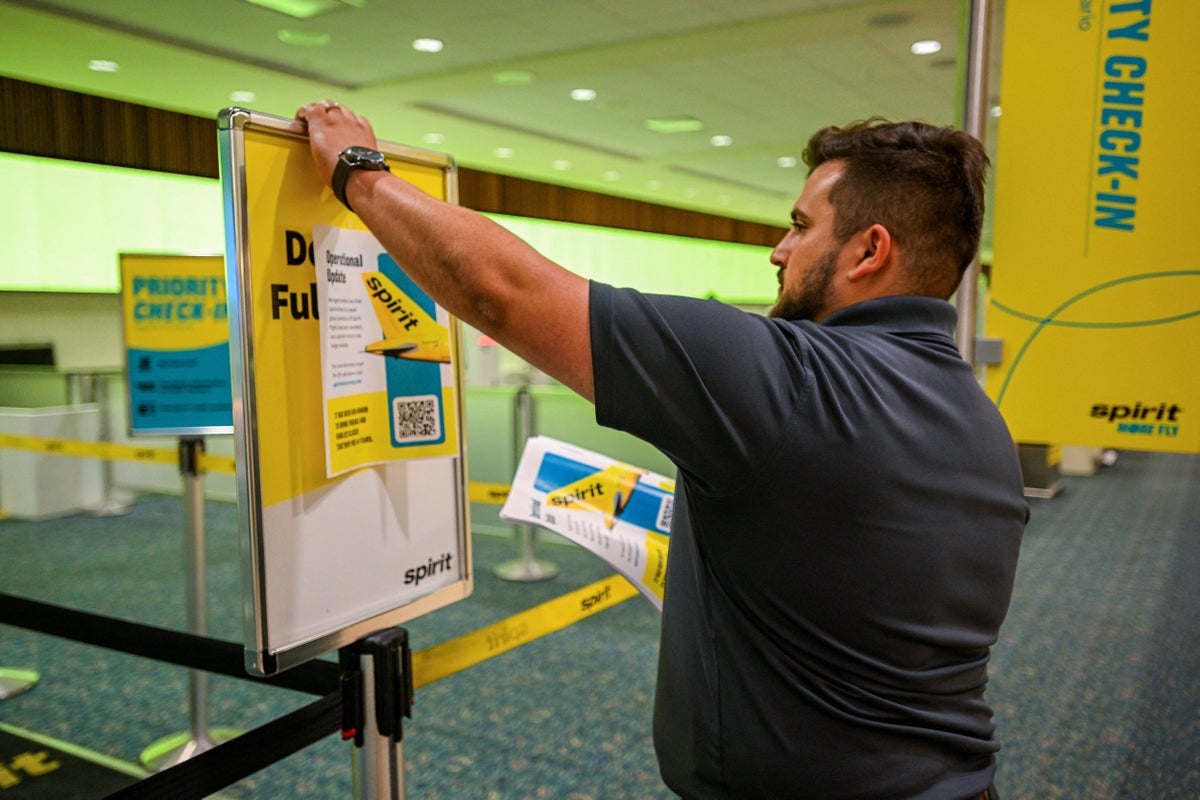
Spirit Airlines, a pioneering discount carrier, officially announced the end of its operations after failing to reach an agreement with the U.S. Government to save the financially struggling company. The airline's parent company, Spirit Aviation Holdings, Inc., declared the cancellation of all flights, advising passengers not to go to the airport. The decision to cease operations was made regretfully, with the last Spirit flight landing in Dallas from Detroit. The airline safely transported over 50,000 passengers on its final day and was working to safely return over 1,300 crew members to their bases.
As of early Saturday morning, FlightAware showed that all of Spirit's flights, totaling 277, had been canceled, with 85 of them at Fort Lauderdale-Hollywood International Airport. Spirit had been operating under Chapter 11 bankruptcy protection since August of the previous year and was on the verge of exiting bankruptcy until a spike in jet fuel prices due to the U.S.-Iran conflict led to a renewed financial crisis. Despite seeking a bailout from the federal government, no agreement could be reached, resulting in the immediate shutdown of the airline.
The closure of Spirit Airlines resulted in the loss of jobs for most of the carrier's 17,000 employees across the U.S., Caribbean, and Latin America. The airline's website was transformed into a going-out-of-business site, informing customers of the flight cancellations and the cessation of customer service. Spirit Airlines expressed pride in its impact on the industry over the past 34 years and stated that refunds for flights purchased with credit or debit cards would be automatically processed.
Following Spirit's shutdown, other airlines like Frontier Airlines offered rescue fare discounts to stranded Spirit passengers. Frontier Airlines aimed to support affected travelers by providing discounted fares and expanding routes previously served by Spirit. The sudden closure of Spirit Airlines left passengers and employees in uncertainty, with the company attributing the decision to the significant impact of rising oil prices and other financial pressures.
Spirit Airlines' CEO, Dave Davis, expressed disappointment over the airline's closure, citing the inability to secure additional funding and the unprecedented challenges faced by the company. Despite efforts to restructure and seek financial support, Spirit ultimately had to pursue an orderly wind-down due to the unsustainable financial outlook. The airline's appeal to the U.S. Government for a bailout did not materialize, leading to the final decision to cease operations.
Davis acknowledged the support of various stakeholders, including labor unions, creditors, and financial partners, in working towards restructuring the business. The closure of Spirit Airlines marked the end of an era for the airline industry, with other carriers stepping in to assist affected passengers. The impact of Spirit's shutdown reverberated across the industry, highlighting the challenges faced by airlines in a volatile market environment.
In conclusion, the closure of Spirit Airlines marked the end of a chapter in the airline industry, with the airline unable to overcome financial challenges despite efforts to restructure and seek government support. The sudden shutdown left passengers stranded and employees without jobs, underscoring the fragility of the aviation sector in the face of external pressures. The legacy of Spirit Airlines as a low-cost carrier and industry innovator will be remembered as the industry adapts to the changing landscape of air travel.