The Comey Indictment: Legal Challenges and First Amendment Protections
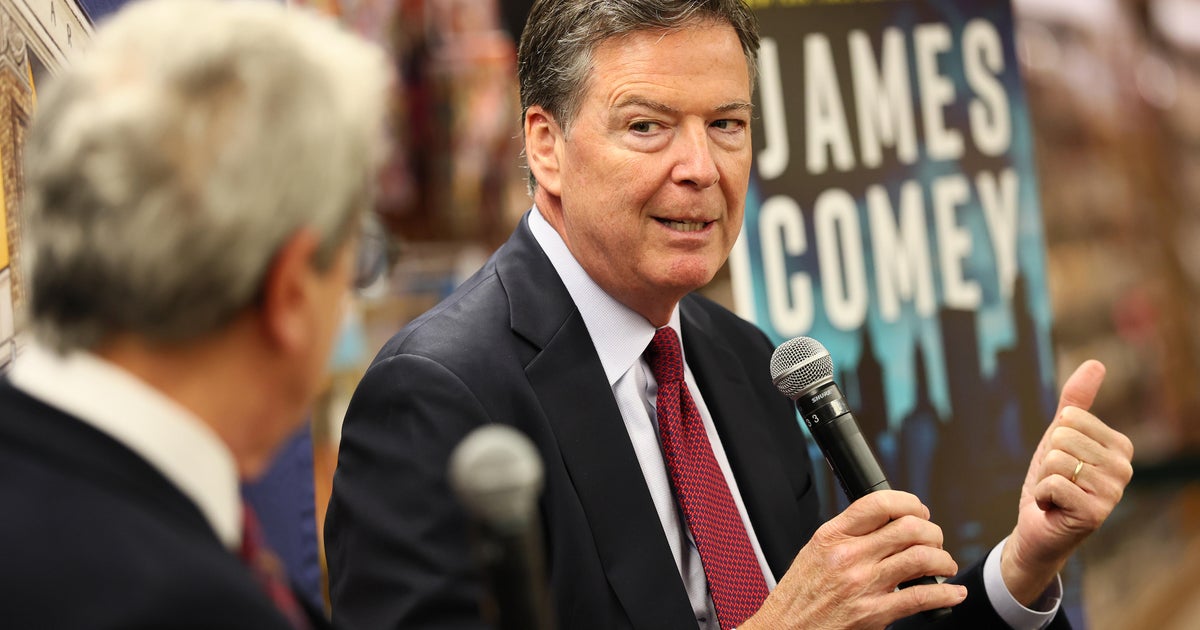
Former FBI Director James Comey is facing a new round of criminal charges following an indictment by a federal grand jury for allegedly making threats against President Trump. Legal experts anticipate that the indictment will be contested on various grounds, making it unlikely that Comey will go to trial over an Instagram post that featured seashells arranged to form the numbers "86 47." The post was interpreted by some as a threat against the 47th president of the United States, with Trump claiming that "86" is a mob term for "kill him." However, the term "86" has other meanings, such as "to throw out" or "get rid of," and is commonly used in restaurant kitchens.
The indictment against Comey is expected to face challenges, with claims of selective and vindictive prosecutions being raised. This is the second criminal case brought against Comey by the Justice Department under Mr. Trump, with the first case involving allegations of lying to Congress. The initial case was dismissed due to the unlawful appointment of the prosecutor, and the court did not rule on Comey's claims of vindictive and selective prosecution.
Comey's defense team plans to argue that he is being unfairly targeted for prosecution due to his protected speech and Trump's animosity towards him. The defense intends to file a motion to dismiss the case on the grounds of vindictive and selective prosecution. Comey posted the controversial photo on social media last year but deleted it shortly after, stating that he did not realize the potential violent connotations associated with the numbers "86 47."
Legal experts point out that the Supreme Court has set a high bar for what constitutes a true threat that is not protected by the First Amendment. Previous cases, such as Watts v. United States and Counterman v. Colorado, have established criteria for determining whether speech crosses the line into a true threat. Given the circumstances of Comey's case, experts are skeptical that the government can prove his speech is not protected by the First Amendment.
The indictment against Comey has sparked discussions about the interpretation of the term "86" and its use in political contexts. Online commentators have highlighted instances where prominent conservatives have used the term in reference to politicians, suggesting that its meaning may vary depending on the context. The legal battle surrounding Comey's case is expected to focus on the constitutional implications of prosecuting speech that may be ambiguous or hyperbolic.
In conclusion, the indictment of James Comey for allegedly making threats against President Trump has raised significant legal questions regarding the interpretation of speech and the boundaries of protected expression. As the case unfolds, the defense is likely to challenge the charges on the grounds of selective and vindictive prosecution, as well as First Amendment protections for political speech. The outcome of this legal battle will have implications for the interpretation of ambiguous or provocative language in the context of potential threats.