Unveiling the Kraken: Giant Octopuses of the Cretaceous Era
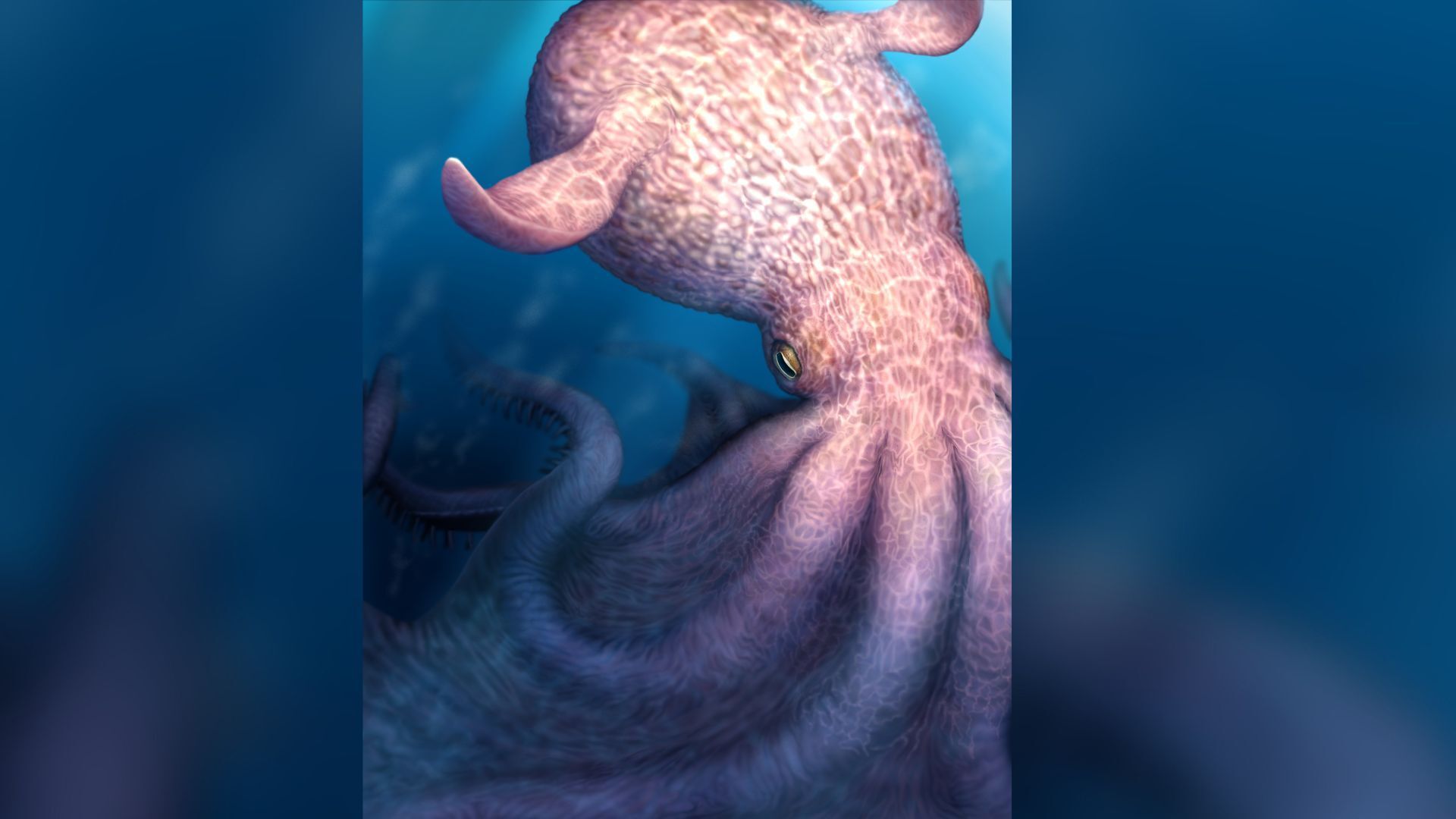
A recent study has uncovered evidence of enormous finned octopuses that roamed the oceans during the Cretaceous period, challenging the traditional belief that only vertebrates were the top predators at that time. These massive octopuses, dubbed "kraken," could have reached lengths of up to 62 feet and were likely the largest invertebrates ever discovered. The findings suggest that these kraken-like creatures used their powerful jaws to crush hard-shelled prey, indicating their position at the top of the marine food chain during the Cretaceous era.
The discovery of these giant octopuses has prompted scientists to reconsider the oceanic hierarchy of the Cretaceous period. Previously, it was assumed that only vertebrates like mosasaurs and plesiosaurs held the top predator position. However, the presence of these large invertebrates challenges this notion and sheds light on the complex marine ecosystems of the past. By studying the fossilized jaws of these ancient octopuses, researchers were able to estimate their size, feeding behavior, and role in the food web.
The study revealed two species of extinct finned octopuses, Nanaimoteuthis jeletzkyi and Nanaimoteuthis haggarti, with estimated lengths ranging from 10 feet to 26 feet for N. jeletzkyi and 23 feet to 62 feet for N. haggarti. These size estimates place N. haggarti among the largest invertebrates ever discovered and highlight the potential intelligence and predatory capabilities of these ancient creatures. The wear patterns on their jaws suggest that they were adept at dismantling hard-shelled prey, further supporting their position as formidable marine predators.
While some experts have raised questions about the size estimates of these ancient octopuses, the study provides valuable insights into the evolutionary history of cephalopods and the dynamics of Cretaceous marine ecosystems. By reevaluating the role of invertebrates in the ancient oceans, researchers are gaining a more comprehensive understanding of the complex interactions that shaped prehistoric marine life.