Unveiling Mars' Organic Mysteries: Curiosity Rover's Groundbreaking Discovery
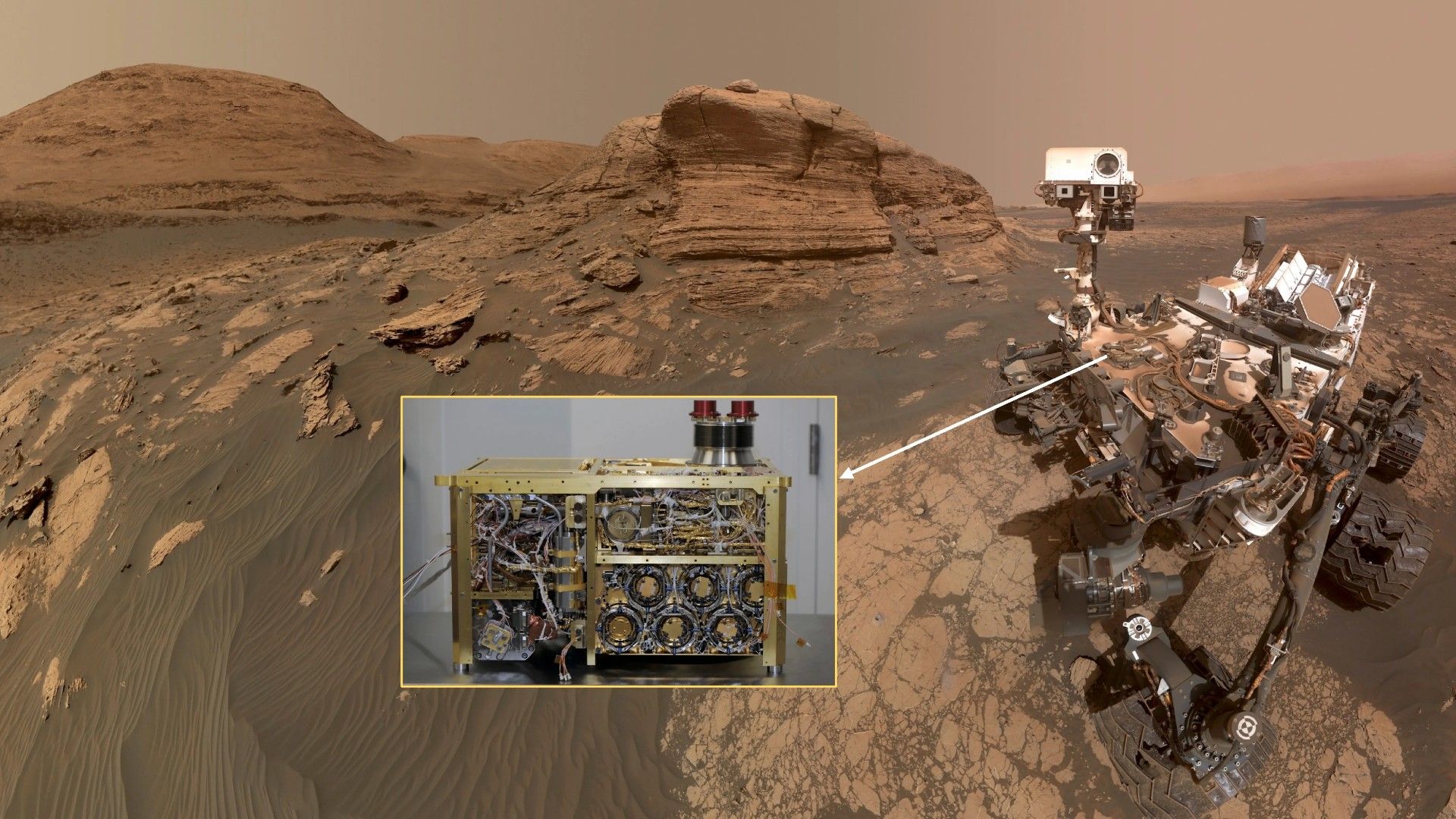
NASA's Curiosity rover has made a significant discovery on Mars by identifying a variety of organic molecules, some of which are considered essential for the development of life on Earth. This groundbreaking finding was made possible through a unique chemical experiment conducted on the Red Planet, marking a significant milestone in planetary exploration.
Since its arrival on Mars in 2012, the Curiosity rover has been exploring the Gale crater and Mount Sharp region, with a recent focus on the Glen Torridon area. This location is believed to have once harbored conditions conducive to supporting ancient life. Using its Sample Analysis at Mars (SAM) instrument suite, Curiosity detected organic molecules in the clay-rich sandstone of the region, including nitrogen and sulfur-bearing compounds that resemble the building blocks of life on Earth.
The study, led by Amy Williams from the University of Florida, revealed over 20 organic molecules in the ancient sedimentary rocks of Mars. These findings suggest that a diverse range of organic compounds has been preserved in Martian sediments despite billions of years of geological processes and radiation exposure. The identification of macromolecular organic matter on Mars opens up new possibilities for understanding the planet's past habitability and potential for life.
The results of Curiosity's experiment have broader implications for future Mars missions and the search for life beyond Earth. By confirming the presence of complex organic molecules on Mars, scientists are now better equipped to explore the origins and nature of these compounds. The discovery of macromolecular carbon in Martian rocks provides valuable insights for designing future life detection instruments and missions to the Red Planet.
The success of the Curiosity rover's TMAH experiment has paved the way for upcoming planetary missions, such as the European Space Agency's Rosalind Franklin rover and the Dragonfly rotorcraft destined for Saturn's moon Titan. These missions will build on the findings of Curiosity to further investigate the presence of organic molecules and potential biosignatures on Mars and other celestial bodies.
In conclusion, NASA's Curiosity rover has made a groundbreaking discovery on Mars by identifying a diverse mix of organic molecules that could shed light on the planet's past habitability and potential for life. The findings from this experiment have significant implications for future exploration of Mars and other planetary bodies, paving the way for new discoveries and insights into the origins of organic matter in the solar system.