Cuba's President Díaz-Canel Stands Firm Against U.S. Pressure: Defending Sovereignty and Dialogue
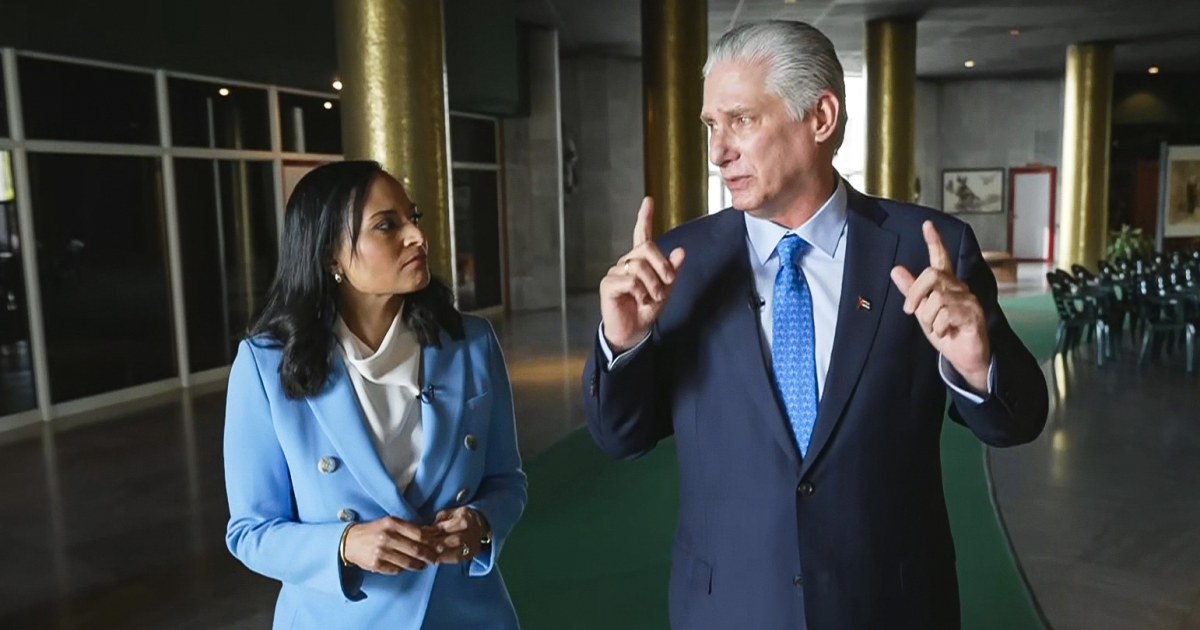
President Miguel Díaz-Canel reaffirmed Cuba's stance against any changes to its government in the face of pressure from President Donald Trump. In an interview with NBC News, Díaz-Canel emphasized the need for dialogue to avoid military aggression from the United States. He dismissed demands for political changes and the release of political prisoners, stating that these issues are not up for negotiation with the U.S. Díaz-Canel also defended Cuba's position on human rights and criticized the portrayal of the country by international organizations.
The Trump administration's pressure campaign has led to a shift in Cuba's rhetoric towards the U.S., with the government increasing military exercises in response to perceived threats. Díaz-Canel reiterated Cuba's defensive stance and expressed a willingness to engage in dialogue with the U.S. Despite tensions, he acknowledged the possibility of reaching deals with the U.S. government but noted the challenges involved. The White House responded to Díaz-Canel's comments by emphasizing the need for Cuba to make a deal and criticizing the country's economic system.
Díaz-Canel attributed Cuba's economic challenges, including electricity shortages and supply issues, to the long-standing U.S. embargo. He described the embargo as genocidal and cruel, hindering Cuba's access to essential resources. Despite these difficulties, Díaz-Canel highlighted Cuba's efforts in developing a Covid vaccine and other medical equipment. He defended Cuba's political system and cited the embargo and the country's geographical proximity to the U.S. as reasons for not implementing reforms seen in other communist nations.
The fuel shortage in Cuba, exacerbated by the embargo and disruptions in oil supply from Venezuela, has worsened living conditions for the population. Díaz-Canel expressed openness to engaging with U.S. companies to address the country's energy needs. The situation in Cuba remains challenging, with inflation, shortages, and blackouts affecting the daily lives of its citizens. Despite these hardships, Díaz-Canel reiterated Cuba's commitment to defending its sovereignty and engaging in dialogue with the U.S. to address mutual concerns.