NASA's Ambitious Vision: Moon Base, Mars Vehicle, and Transformative Plans
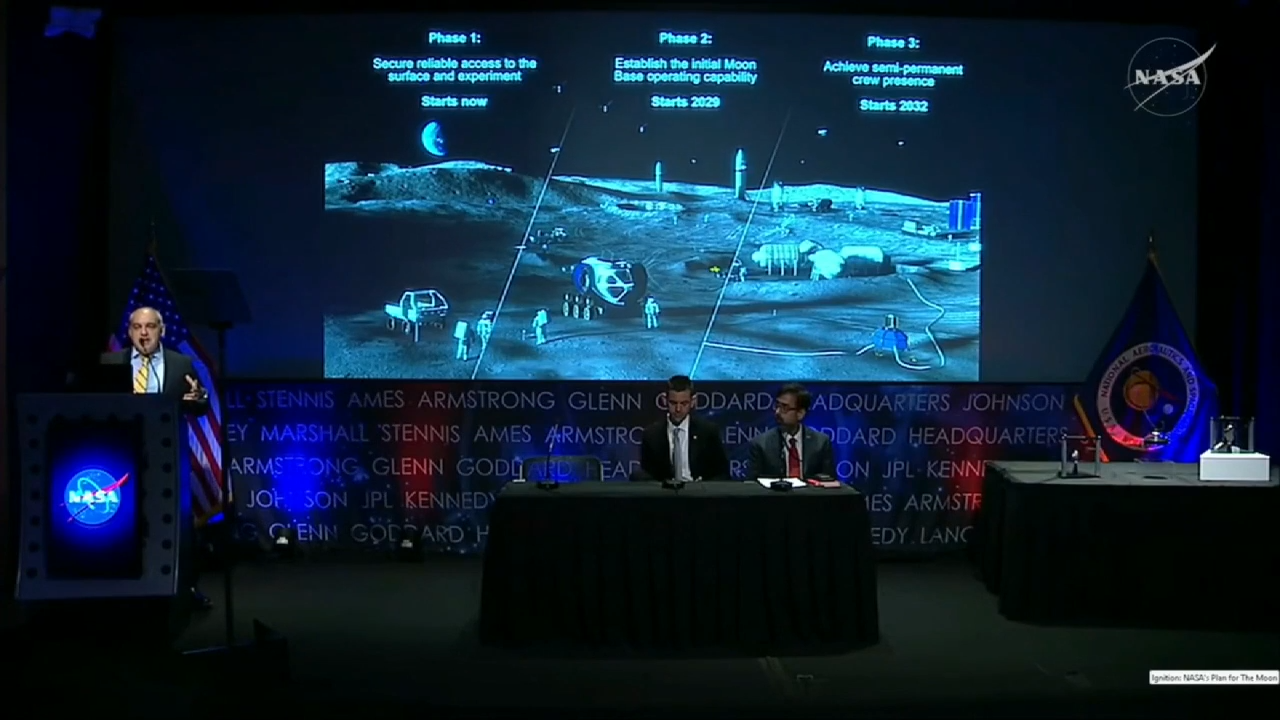
NASA's new chief has unveiled an ambitious vision for the space agency, including plans for a moon base. Administrator Jared Isaacman announced a $20 billion investment over the next seven years to build the moon base through dozens of missions. The agency also aims to launch a nuclear-powered Mars vehicle by 2028. Isaacman's transformative plans emphasize urgency and innovation in NASA's scientific and human spaceflight pursuits.
The pathway to funding these projects is unclear, but Isaacman is determined to implement bold changes at NASA. He aims to focus on the objectives of the National Space Policy and leverage the workforce and industrial capabilities of the nation and its partners. The agency will pause plans for the Gateway space station and repurpose existing resources to support the lunar base. Additionally, NASA plans to increase the frequency of robotic lander missions to the moon to pave the way for a lunar settlement.
Isaacman's plan involves shifting requirements and contracts, reimagining space-based infrastructure, and working closely with commercial space companies. He has emphasized the importance of avoiding delays and cost overruns in projects, signaling a more proactive approach to project management. The 2028 Mars mission, known as SR-1 Freedom, will utilize nuclear electric propulsion technology and inform future plans for a fission reactor on the moon's surface.
The SR-1 Freedom mission will also deploy helicopters on the Martian surface to further explore the planet. NASA's goal is to create a fission reactor on the moon by 2030 to power the lunar base. Steven Sinacore, NASA's program executive for Fission Surface Power, anticipates the need to educate the public about these technologies to address any concerns. Isaacman's vision for NASA emphasizes collaboration with the private sector and a focus on innovation to achieve ambitious space exploration goals.