The Controversy Surrounding the Proposed Trump Gold Coin: A Debate on Democracy and Currency Symbolism
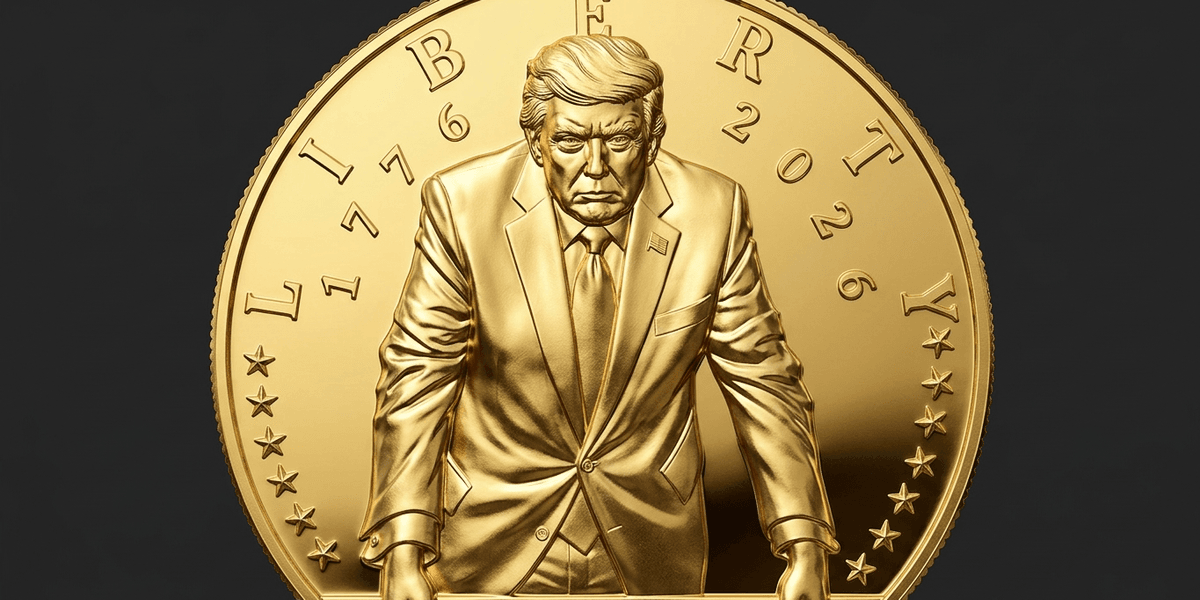
The U.S. government has recently redesigned the Great Seal of the United States for the dime in honor of the country's 250th birthday. Coin enthusiasts are now eagerly awaiting a decision on whether President Donald Trump will have his own official U.S. government gold coin. The Commission of Fine Arts is set to meet and consider approving a 24-carat gold coin featuring the president leaning on a desk, a design that has sparked debate among committee members. Trump has been actively making changes in Washington D.C., such as renovating the White House and planning to construct the Arch de Trump, a monumental arch inspired by the Arc de Triomphe in Paris.
These gold coins, typically priced at several thousand dollars, are expected to be released during a challenging economic period when many families are facing financial difficulties. However, the decision may face opposition from the bipartisan Citizens Coinage Advisory Committee, which recently rejected the idea of a Trump gold coin. Committee members expressed concerns about breaking democratic norms and appearing subservient to royalty by featuring a sitting president on currency. The law also stipulates that individuals must be deceased before being depicted on currency, further complicating the issue.
Republican coin collector Michael Moran, a member of the Citizens Coinage Advisory Committee, strongly opposes the idea of a Trump coin, citing concerns about American cultural traditions and the significance of the images on coinage. Former committee member Kareem Abdul-Jabbar, a renowned coin collector, expressed disappointment in the proposed Trump coin, emphasizing the importance of coins as tools for education and inspiration. The controversy surrounding the Trump coin reflects broader debates about the role of leaders on currency and the values they represent.
In the past, the commission approved a $1 Trump coin, which faced criticism from Democratic lawmakers who viewed it as inappropriate for a democracy. The current law prohibits living presidents from appearing on $1 coins, but Trump's coin is being classified as a "gold coin" to circumvent this restriction. Despite potential legal challenges, the decision to feature a sitting president on a coin raises fundamental questions about the principles of democracy and the symbolism of currency. The debate over the Trump coin underscores the complexities of honoring individuals on official currency and the values they embody.
In conclusion, the potential introduction of a Trump gold coin by the U.S. government has sparked controversy and debate among coin collectors, historians, and lawmakers. The decision to feature a sitting president on currency raises concerns about democratic norms, cultural traditions, and the symbolism of national symbols. As the discussion continues, the fate of the Trump coin remains uncertain, highlighting the broader implications of commemorating individuals on official currency in a democratic society.