The Potential Successor: Mojtaba Khamenei's Path to Iran's Supreme Leadership
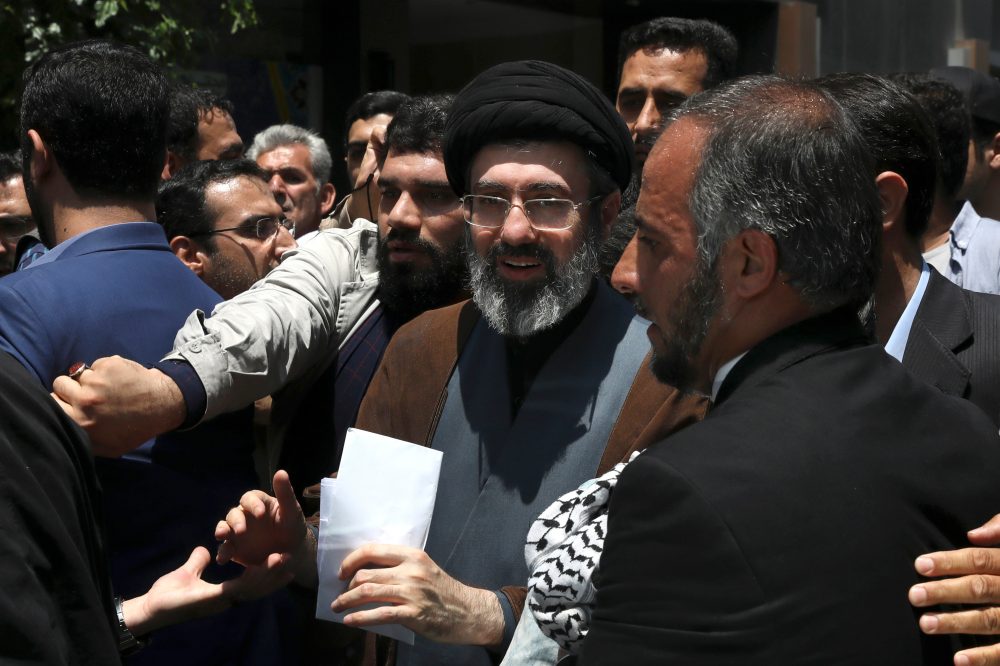
The son of Iran's late Supreme Leader Ayatollah Ali Khamenei, Mojtaba Khamenei, is a potential candidate to succeed his father as the country's next supreme leader. Despite not holding any official government position, Mojtaba Khamenei has been considered a contender for the role even before his father's death in an Israeli strike. Following the attack that killed his father and wife, Mojtaba Khamenei has reportedly gone into hiding as American and Israeli airstrikes continue to target Iran.
Mojtaba Khamenei's name has been circulating as a possible successor to his father, especially after his father and wife were considered martyrs in the war against the United States and Israel. With the Assembly of Experts set to select the next supreme leader, Khamenei's stock may have risen among the aging clerics. The new supreme leader will inherit control of Iran's military engaged in war and a stockpile of highly enriched uranium that could be used for nuclear weapons.
Born in 1969 in Mashhad, Mojtaba Khamenei grew up during the Islamic Revolution and later fought in the Iran-Iraq war. He has been described as a powerful figure within the regime, with significant influence and access to wealth and assets. Khamenei has been sanctioned by the United States for supporting his father's regional ambitions and oppressive domestic objectives. He has also been accused of interfering in Iranian elections and supporting hard-line candidates.
The transfer of power in the office of supreme leader is a significant event in Iran's political landscape. Ayatollah Ruhollah Khomeini was the only other supreme leader before Ayatollah Ali Khamenei. The new supreme leader will take charge after the recent war with Israel and amid ongoing tensions with the U.S. and Israel. The supreme leader holds ultimate authority in Iran's Shiite theocracy, overseeing all state matters and commanding the military and paramilitary forces.
In conclusion, Mojtaba Khamenei's potential candidacy for Iran's next supreme leader position has garnered attention following his father's death. As the country navigates through internal and external challenges, the selection of the new supreme leader will have far-reaching implications for Iran's future political landscape and its relations with the international community.