Reawakening of Echinus Geyser: Yellowstone's Largest Acidic Geyser Returns to Life
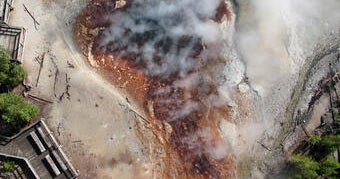
Yellowstone National Park announced that the largest acidic geyser in the world, Echinus Geyser, has reawakened after a dormant period of over five years. Echinus Geyser, situated in the Norris Geyser Basin, is known for its unique features, including its 66-foot width and surrounding rocks resembling sea urchins. The geyser's acidic nature is attributed to a combination of acidic gases and neutral waters, resulting in a distinct water chemistry that creates red-colored formations and spiny rocks around the geyser pool.
During the latter half of the 20th century, Echinus Geyser was a popular attraction in Yellowstone, with frequent eruptions that could reach heights of up to 75 feet and last as long as 90 minutes. Visitors were able to observe the eruptions from viewing platforms and benches, providing a unique experience compared to other geysers in the park. However, the geyser's activity began to decline in the early 2000s, with sporadic eruptions recorded until October 2017 when the eruptions suddenly ceased.
In February 2026, Echinus Geyser showed signs of renewed activity, with eruptions occurring throughout the month. The geyser exhibited regular 20-30 foot eruptions every few hours, indicating a resurgence in its activity. Recent temperature graphs have shown spikes in activity preceding eruptions, hinting at potential future eruptions.
The reawakening of Echinus Geyser in Yellowstone National Park has sparked excitement among visitors and geology enthusiasts, offering a unique opportunity to witness the natural phenomenon of an acidic geyser in action. As the geyser continues to display signs of increased activity, park officials are monitoring its behavior closely to ensure the safety of visitors and preserve the natural beauty of the area.