Trump's New 10% Global Tariff Plan: Impact on Trade Deals and Business Refunds
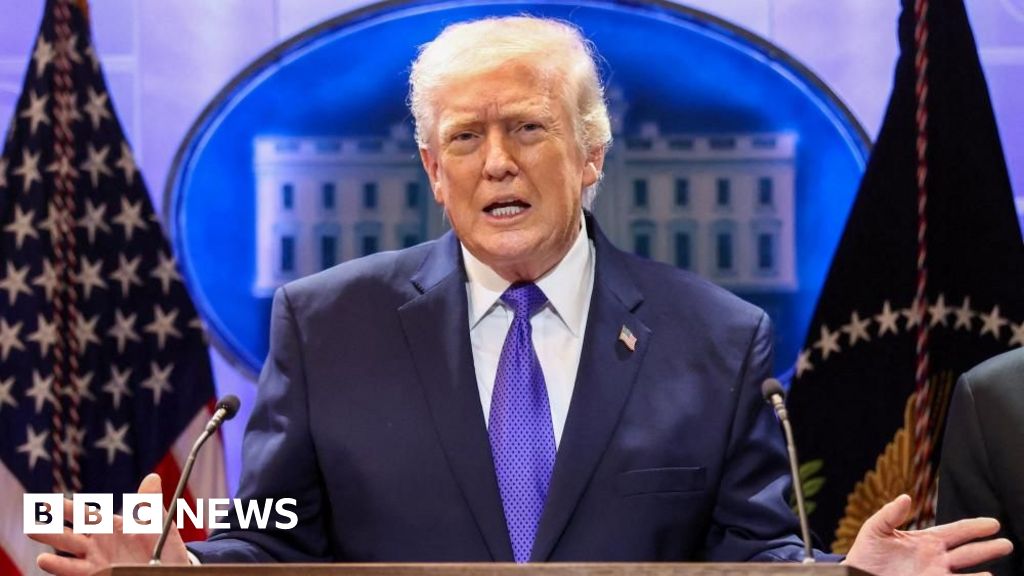
President Trump has announced a new 10% global tariff to replace the ones recently struck down by the Supreme Court. The court ruled that the president had exceeded his powers in imposing the tariffs, leading to a victory for businesses and states challenging the duties. Trump plans to continue pressing ahead with tariffs using other laws, despite the court's decision. The tariffs initially targeted several countries, sparking concerns about higher prices and disrupting trade.
The court's decision was based on the argument that the law used by the president did not explicitly grant him the power to impose tariffs. Chief Justice John Roberts, along with liberal and conservative justices, sided with this view. Trump criticized the justices who voted against his trade policy, calling them "fools" and "unpatriotic." The ruling was welcomed by businesses, with hopes for refunds and relief from tariff costs.
Trump plans to impose the new 10% tariff under a different law, Section 122, which allows tariffs up to 15% for a limited period. The White House may also consider other tools like Section 232 and Section 301 to address national security risks and unfair trade practices. Trade partners like the UK, India, and the EU will now face the global 10% tariff under Section 122. The situation has become more complex, with uncertainty surrounding the impact on trade deals and tariffs.
Major trade partners have reacted cautiously to the ruling, with the EU analyzing the decision carefully. The US has collected significant tariffs under the previous law, and firms are seeking refunds through lawsuits. The majority decision did not address refunds directly, leaving the process uncertain. Justice Brett Kavanaugh warned of potential chaos, and economists cautioned that the litigation process could be challenging for smaller firms. Businesses hope for a streamlined procedure to recoup their funds without lengthy legal battles.