Ukrainian Skeleton Athlete Defies IOC: The Controversy Over His Hand-Painted Helmet
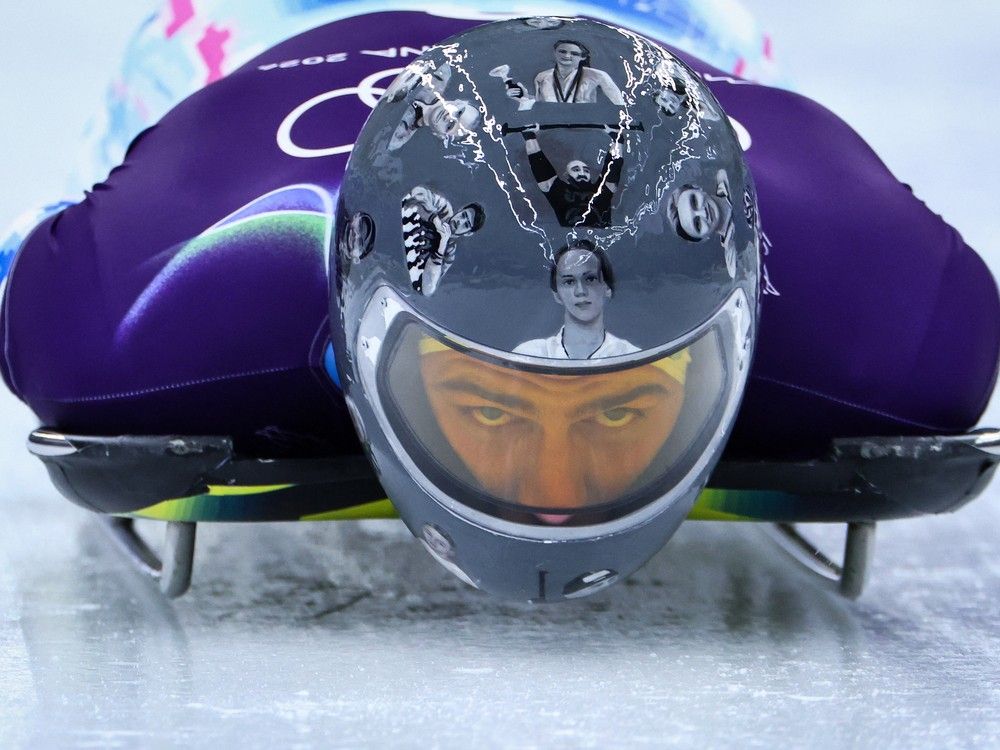
Vladyslav Heraskevych, a skeleton athlete from Ukraine, made a statement at the Cortina Sliding Centre by expressing his intention to continue wearing a hand-painted helmet featuring faces of Ukrainian athletes who lost their lives in the conflict with Russia. Despite the International Olympic Committee's compromise of allowing him to wear a black armband instead, Heraskevych remained firm in his decision to wear the helmet during practice sessions. He believes that the helmet does not violate any rules and plans to fight for his right to compete with it.
The IOC spokesperson, Mark Adams, acknowledged the athletes' desire to honor their fallen colleagues but emphasized the organization's rules that aim to keep sports separate from political and religious influences. Heraskevych disagreed with the IOC's assessment, citing examples of other athletes who have displayed personal messages or symbols without facing sanctions. He argued that the helmet does not breach Rule 50 of the Olympic Charter, which prohibits political and religious messages at Olympic venues.
Heraskevych's helmet, painted by an artist in Kyiv, serves as a tribute to the Ukrainian athletes affected by the conflict with Russia. Despite the challenging conditions in Kyiv, where residents are enduring Russian attacks and limited resources, Heraskevych remains determined to wear the helmet in competition. President Volodymyr Zelenskyy has also criticized the IOC's decision to ban the helmet, showing support for Heraskevych's cause.
As the skeleton competition approaches on February 12, Heraskevych plans to hold a news conference in Cortina to address the ongoing situation. Meanwhile, Josip Brusic is the only Canadian athlete competing in the men's skeleton event, representing his country on the international stage. The controversy surrounding Heraskevych's helmet highlights the intersection of sports and politics at the Winter Olympics, sparking discussions about athletes' rights to express their personal beliefs on the global platform.