Ukrainian Skeleton Athlete Vladyslav Heraskevych's Tribute to Fallen Compatriots: Navigating Politics at the Winter Olympics
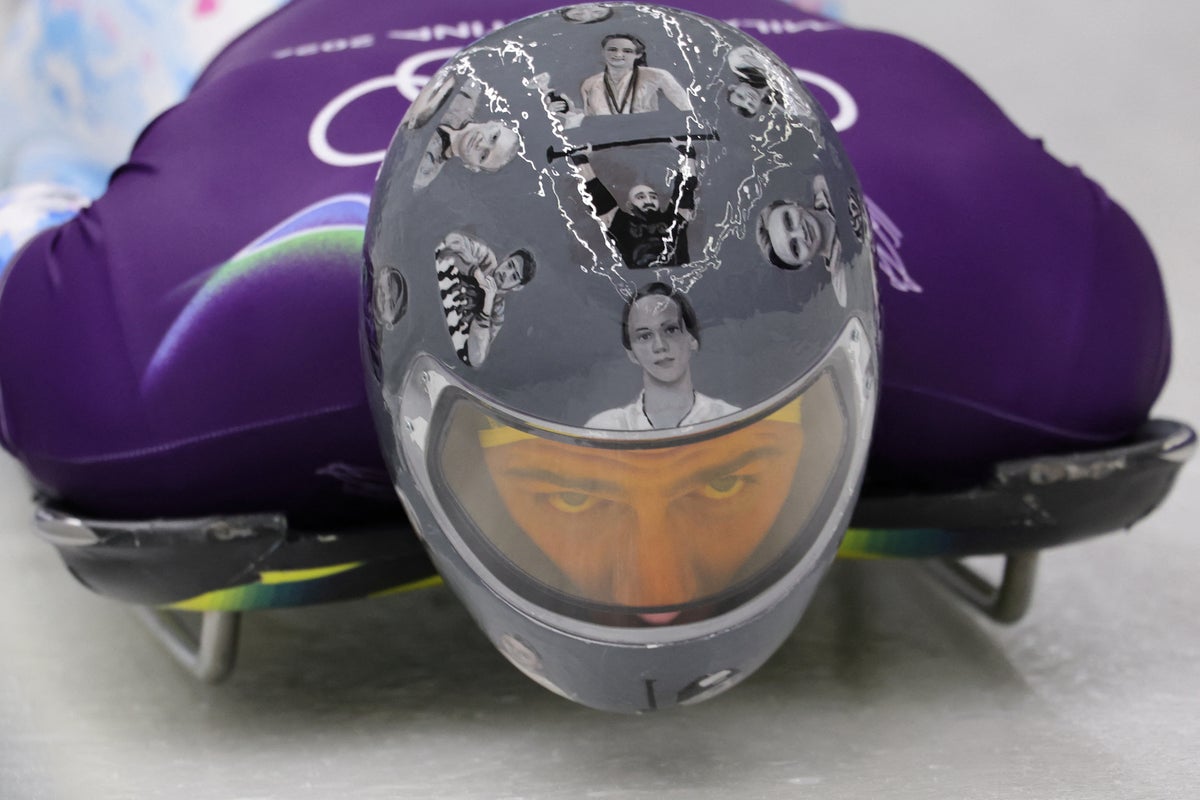
Ukrainian skeleton athlete Vladyslav Heraskevych honored his fallen compatriots by training with a helmet adorned with images of Ukrainian individuals who lost their lives in the war. Among those depicted on his helmet were Alina Perehudova, Pavlo Ischenko, Oleksiy Loginov, Ivan Kononenko, Mykyta Kozubenko, Oleksiy Habarov, and Daria Kurdel. Some of these individuals were Heraskevych's friends, and he expressed his commitment to keeping the focus on Ukraine's situation during the Winter Olympics.
Despite the International Olympic Committee's regulations against political demonstrations at Olympic venues, Heraskevych aimed to raise awareness of Ukraine's plight without violating the rules. The IOC and Ukraine's Olympic Committee were reportedly in discussions regarding Heraskevych's helmet, but no official statements were made at the time.
Following Russia's invasion of Ukraine in 2022, athletes from Russia and Belarus faced restrictions in international sports participation. However, the IOC has since supported their gradual return under strict conditions, emphasizing the separation of sport from international conflicts. While Rule 50.2 of the Olympic Charter prohibits political demonstrations at Olympic sites, there have been historical instances of athletes using sports events to make political statements.
Notable examples include the 1968 Olympics in Mexico City when US sprinters Tommie Smith and John Carlos protested racial injustice during a medal ceremony, resulting in their expulsion from the Games. More recently, Afghan breakdancer Manizha Talash was disqualified from the 2024 Paris Olympics for wearing a cape with a political slogan. However, some athletes have escaped punishment for similar actions when they were not deemed explicitly political, such as the Australian women's football team displaying a flag of the first peoples of Australia at the Tokyo Olympics.
In conclusion, Heraskevych's tribute to his fallen compatriots through his helmet design highlights the complex intersection of sports and politics in international competitions. While athletes navigate regulations on political demonstrations, their actions can draw attention to important social issues, sparking debates on the boundaries of expression in the sporting arena.