Military Leaders in Diplomacy: A New Approach to U.S. Foreign Policy
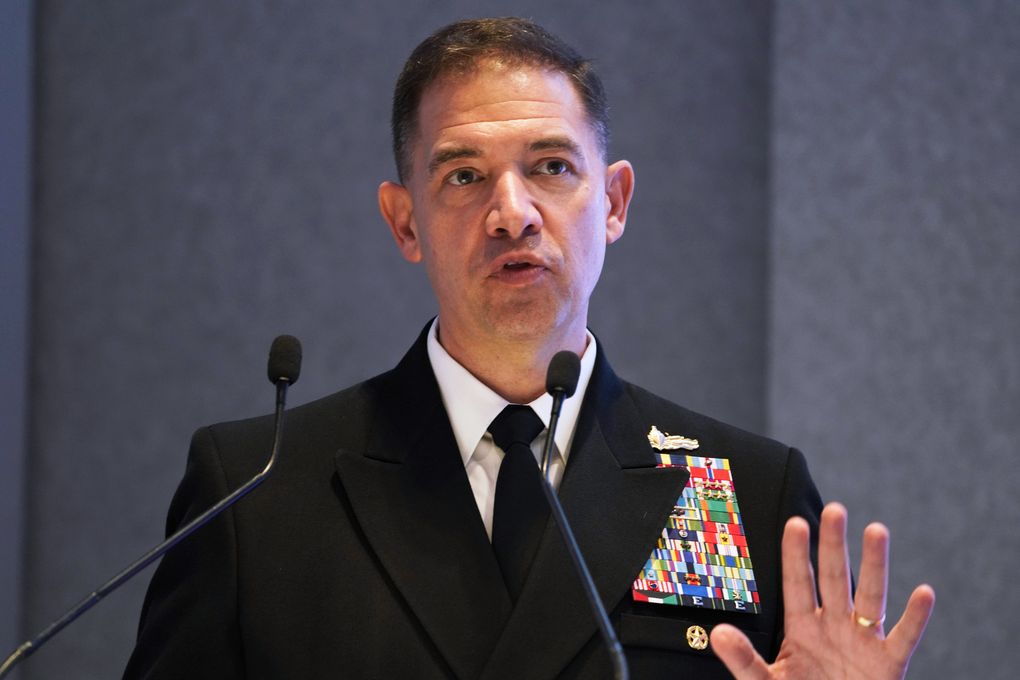
President Donald Trump has chosen to involve military leaders in high-level diplomatic negotiations, with the top U.S. commander in the Middle East, Adm. Brad Cooper, participating in talks over Iran's nuclear program in Oman. Army Secretary Dan Driscoll has also been involved in negotiations to end the Russia-Ukraine war. The decision to bring in military leaders reflects a departure from traditional U.S. foreign policy and diplomacy, with special envoy Steve Witkoff and Jared Kushner also playing key roles in the negotiations.
Elisa Ewers, a former national security official, expressed concerns about the reliance on military leaders for diplomacy, highlighting the importance of skilled diplomats in resolving foreign policy challenges. However, Eliot Cohen, a former State Department counselor, noted that involving military leaders in diplomatic efforts is not unprecedented, citing historical examples of American generals in arms control talks.
The talks in Oman aimed to ease tensions between Iran and the U.S., with Trump emphasizing the need for a deal on Iran's nuclear program. Adm. Cooper's presence was seen as a signal of resolve and intimidation, according to defense and foreign policy analysts. Michael Singh, a former White House official, emphasized Cooper's expertise in the region and technical knowledge of Iran's capabilities.
In negotiations to end the Russia-Ukraine war, Army Secretary Driscoll has played a key role in maintaining dialogue between Ukrainian officials and U.S. representatives. Driscoll's military background and leadership experience have been valuable in facilitating communication and understanding military perspectives in the negotiations. Gen. Alexus Grynkewich, commander of U.S. and NATO forces in Europe, has also been involved in establishing military-to-military dialogue between the U.S. and Russia.
Overall, the involvement of military leaders in diplomatic negotiations under the Trump administration reflects a shift in approach to foreign policy. While some experts raise concerns about the overreliance on the military, others see the value of leveraging military expertise and leadership in complex diplomatic efforts. The outcome of these negotiations will be crucial in determining the future of U.S. relations with Iran and Russia, as well as the resolution of ongoing conflicts in the Middle East and Eastern Europe.