Challenges and Opportunities: The State of the Washington State Republican Party Post-2024 Election
After the 2024 election, the Washington state Republican Party faced a significant defeat, losing all statewide races and legislative seats. Former GOP candidate Bill Bryant criticized the party for prioritizing divisive rhetoric over winning elections. Recent statements from the state party have been controversial and offensive, lacking a serious political tone. The party's communication strategy has been self-harming, with tweets targeting individuals like U.S. Rep. Pramila Jayapal and state Attorney General Nick Brown inappropriately.
The state Republican organization is facing challenges beyond communication missteps. With 10 congressional seats up for grabs, the party has candidates in only five districts. While some candidates like Rep. Michael Baumgartner and Sen. John Braun are running strong campaigns, others are struggling to raise funds and gain traction. The party's financial accounts ended 2025 with more debts than cash, putting them at a disadvantage compared to state Democrats.
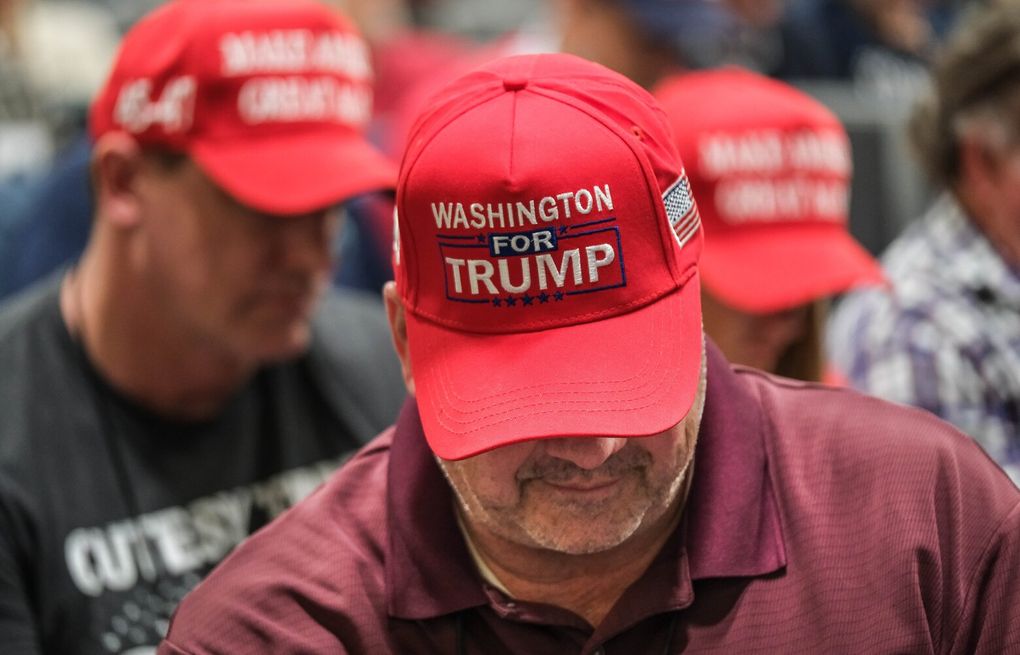
Polls show a decline in approval ratings for former President Donald Trump in Washington state, indicating a shift towards a more Democratic-leaning political landscape. The state now ranks as the sixth bluest state in the country, with Trump's approval rating dropping below 30%. The rise of the MAGA movement has contributed to the decline of the local Republican Party brand, making it increasingly challenging for GOP candidates to compete in elections.
Having a viable opposition is crucial for a healthy political system, but the lack of a strong Republican presence in Washington state raises concerns about one-party rule. The Democratic Party's recent state income tax plan rollout highlighted the importance of having a balanced political landscape to ensure accountability and effective governance. Without a competitive Republican Party, political thinking on both sides may become stagnant and unresponsive to the needs of the electorate.
The current state of the Washington state Republican Party reflects a lack of effort to win elections and engage with voters. As the party faces more challenges and setbacks, rebuilding its image and regaining relevance in the political arena will require a shift towards a more inclusive and constructive approach. Embracing a platform that resonates with a broader spectrum of voters and focusing on policy solutions rather than divisive rhetoric could be key to revitalizing the party's standing in the state.