Climate Warning: Approaching the 1.5-Degree Tipping Point
The EU's climate monitoring service has issued a warning that the critical 1.5-degree climate tipping point could be reached by the end of this decade. Recent research from the Copernicus climate research institute indicates that the current rate of global warming may lead to surpassing the Paris Agreement's temperature limit of 1.5 degrees. This limit was established to mitigate the severe impacts of climate change, which are significantly reduced at 1.5 degrees compared to 2.0 degrees. Exceeding this threshold could result in more extreme weather events and potential climate tipping points, such as the collapse of tropical coral reef systems.
If the 1.5-degree limit is reached, it would occur a decade earlier than initially projected when the environmental treaty was signed in 2015. The year 2025 has been recorded as the third warmest year, closely following 2023 and 2024. Copernicus, the Earth observation arm of the European Union's space program, monitors the planet and environment under the management of the European Commission. Carlo Buontempo, Director of Copernicus, emphasized that surpassing the Paris Agreement temperature limit is inevitable, with the current global warming rate standing at approximately 1.4 degrees above the pre-industrial level.
The global temperature average over the past three years has already exceeded 1.5 degrees above the pre-industrial level, with the last eleven years ranking as the warmest on record. Mauro Facchini, Head of Earth Observation at the European Commission, expressed disappointment in surpassing the three-year average of 1.5 degrees, labeling it as an unwanted milestone. Copernicus highlighted that the recent warmth is attributed to the accumulation of greenhouse gases in the atmosphere and elevated sea-surface temperatures worldwide. Laurence Rouil, Director of Copernicus Atmosphere Monitoring Service, stressed the role of human activity as the primary driver of the exceptional temperatures observed, with greenhouse gas levels steadily rising over the past decade.
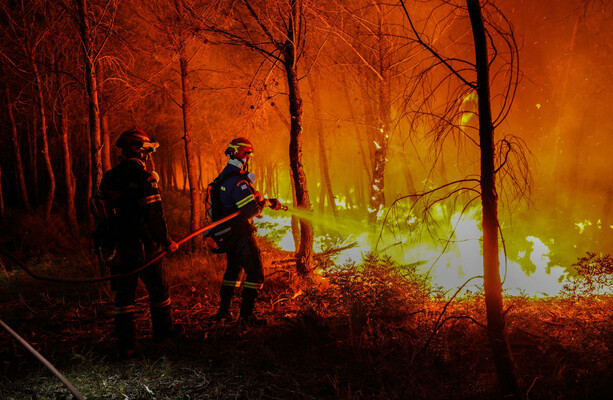
In 2025, half of the global land area experienced more days with temperatures exceeding 32 degrees, leading to heat stress, a significant factor in weather-related deaths according to the WHO. Dry and windy conditions in certain regions exacerbated high temperatures, fueling wildfires and deteriorating air quality. The year saw a surge in extreme weather events globally, including record wildfire emissions in Europe, severe storms in Europe, Asia, and North America, as well as wildfires in Spain, Canada, and Southern California.
In conclusion, the urgency to address climate change is underscored by the imminent risk of surpassing the 1.5-degree temperature limit and the escalating frequency of extreme weather events. Copernicus' data highlights the critical need for decisive action to mitigate greenhouse gas emissions and adapt to the changing climate landscape. The message from the atmosphere is clear, emphasizing the importance of listening and responding effectively to the environmental challenges ahead.