Title: "Pakistan Condemns India's Unilateral Suspension of the Indus Water Treaty: A Threat to Regional Stability
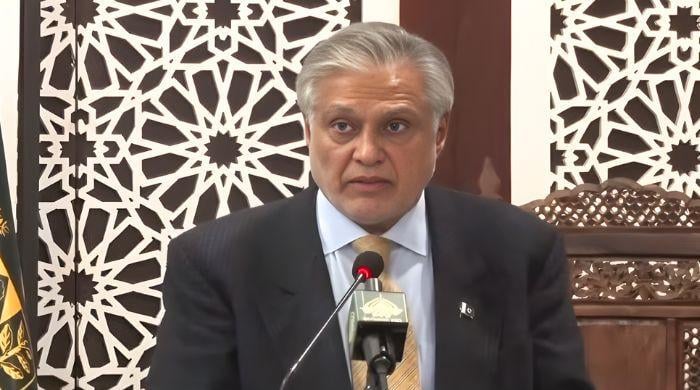
Pakistan has expressed grave concerns over India's unilateral suspension of the Indus Water Treaty (IWT) following the Pahalgam attack in April 2025. Deputy Prime Minister and Foreign Minister Ishaq Dar emphasized that India's actions pose a significant threat to Pakistan's food and economic security, potentially leading to a severe humanitarian crisis. Dar condemned India's move as a deliberate weaponization of water resources, highlighting the detrimental impact on Pakistan's citizens' lives and livelihoods.
The Indus Water Treaty, considered a crucial element for peace and stability in South Asia, has been disrupted by India's suspension, which includes halting the exchange of hydrological data and disrupting the joint monitoring mechanism agreed upon under the treaty. Pakistan has raised concerns over India's abrupt variations in the flow of the River Chenab, urging the international community to take notice of India's disregard for the bilateral treaty and its weaponization of water resources.
Millions of people in Pakistan who rely on the River Chenab for agriculture, water, and sanitation are facing adverse effects due to India's actions. Deputy Prime Minister Dar emphasized the importance of upholding international treaties and highlighted the risks posed to regional peace and security by India's unilateral suspension of the Indus Water Treaty. Despite Pakistan's commitment to resolving disputes peacefully, it remains steadfast in protecting its citizens' water rights.
The Permanent Court of Arbitration has reaffirmed the validity of the Indus Water Treaty in recent rulings, emphasizing that both parties are bound by its provisions. Pakistan has called on the international community, particularly members of the UN Security Council, to address the situation promptly and ensure the treaty's integrity. The Indus Water Treaty, signed in 1960, divides the Indus and its tributaries between India and Pakistan, regulating water sharing between the two countries.
The treaty does not allow for unilateral suspension or termination, and it includes mechanisms for resolving disputes. Following tensions between India and Pakistan after the Pahalgam attack, India unilaterally suspended the treaty, accusing Pakistan of involvement in the incident. Pakistan has denied these allegations, emphasizing the need to uphold the treaty and protect the rights of its citizens.
In conclusion, Pakistan has strongly condemned India's unilateral suspension of the Indus Water Treaty, highlighting the severe implications for its food and economic security. The disruption of the treaty poses risks to regional peace and security, emphasizing the importance of upholding international agreements and resolving disputes through peaceful means. Pakistan remains committed to protecting its citizens' water rights and calls on the international community to address the situation promptly.