Unveiling Titan's Secrets: New Study Challenges Assumptions About Saturn's Moon's Composition and Habitability
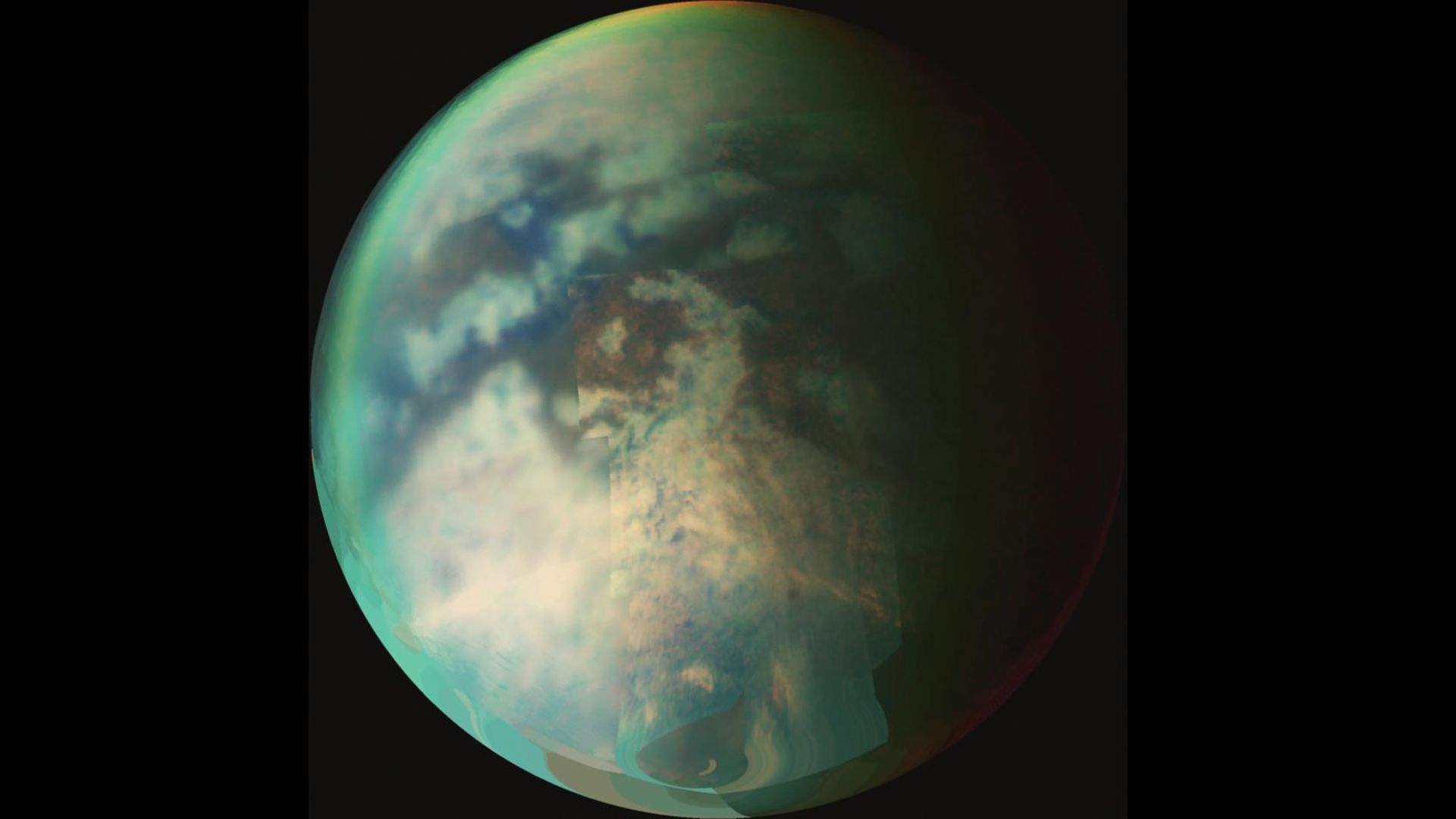
Titan, Saturn's largest moon, has long been a subject of fascination due to its unique characteristics. A recent study suggests that rather than harboring a global ocean beneath its icy surface, Titan may contain widespread pockets of liquid water. This discovery challenges previous assumptions about the moon's composition and raises questions about its potential habitability.
The study, led by planetary scientist Flavio Petricca from NASA's Jet Propulsion Laboratory, utilized advanced methods to analyze data from NASA's Cassini mission. The researchers found that Titan's interior is more resistant to distortion from Saturn's gravity than previously believed. This resistance indicates that Titan likely does not have a hidden ocean but instead features a layer of slushy ice near its melting point, potentially hosting pockets of liquid water.
While Titan may have had an underground ocean in its early history, the lack of sufficient heat from radioactive elements may have caused it to freeze. The researchers suggest that Titan's current state may be transitioning, with heating potentially increasing again. This new understanding challenges the notion of ocean worlds being common and prompts further investigation into Titan's habitability.
NASA's upcoming Dragonfly mission to Titan aims to provide more insights into the moon's geology and conditions for habitability. By scanning Titan's surface, scientists hope to unravel the mysteries surrounding its composition and potential for hosting life. The findings of this study, published in the journal Nature, shed light on Titan's complex nature and the ongoing quest to understand its unique environment.