Building Resilience: The Traditional Island-Building Techniques of Akuak, South Sudan
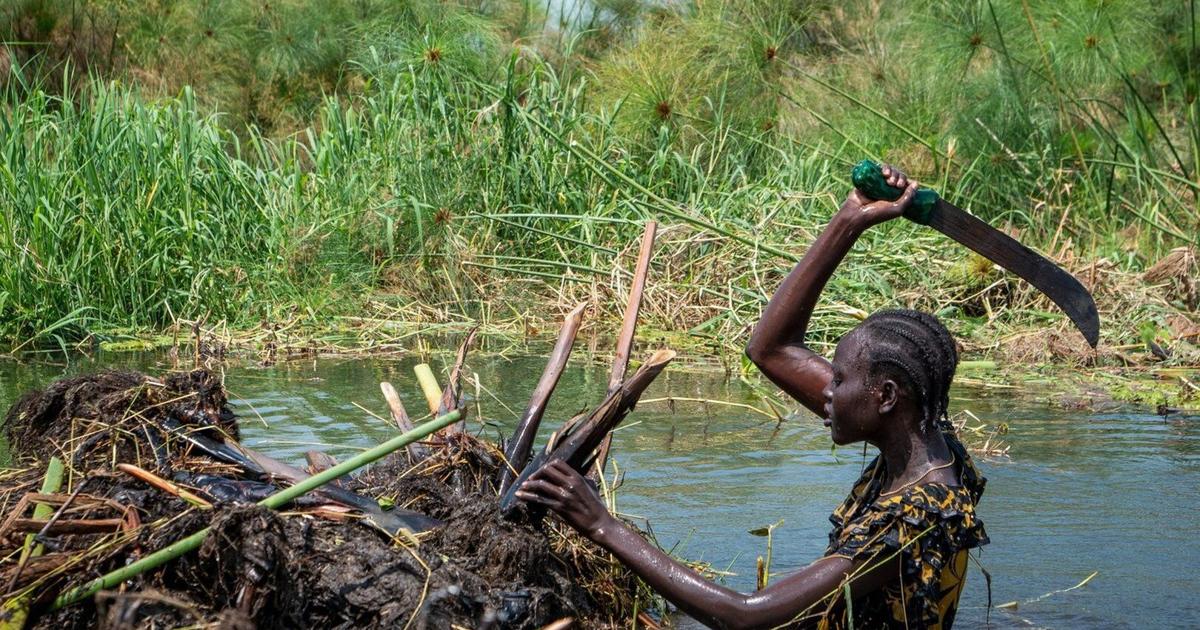
In the village of Akuak, South Sudan, Ayen Deng Duot is seen standing in the water, using a machete to break up papyrus roots and create a human-made shore. This process involves throwing the broken roots onto a mixture of plants and clay soil, which, once compacted and sun-dried, will expand the island where Ayen and her family reside.
The Akuak community, consisting of approximately 2,000 individuals, has been utilizing the method of layering plants and mud to construct islands for many generations in the swampy region along the Nile River. The chief of the community notes that the islands have become more challenging to maintain due to increased flooding caused by climate change. As a result, community members dedicate hours each day to dredging up material by hand to prevent water from encroaching on their living spaces.
South Sudan is currently facing devastating flooding for the sixth consecutive year, exacerbating the challenges faced by communities like Akuak. The residents of Akuak continue to adapt to the changing environment by employing traditional techniques to protect their homes and livelihoods from the impacts of climate change and rising water levels.
In conclusion, the Akuak community's resilience and resourcefulness in the face of environmental challenges highlight the importance of traditional knowledge and practices in adapting to a changing climate. As they continue to navigate the impacts of flooding and climate change, their innovative methods of island-building serve as a testament to their determination to safeguard their homes and way of life.