Unveiling the Cosmic Storm: Supermassive Black Hole in NGC 3783 Erupts in Spectacular Display
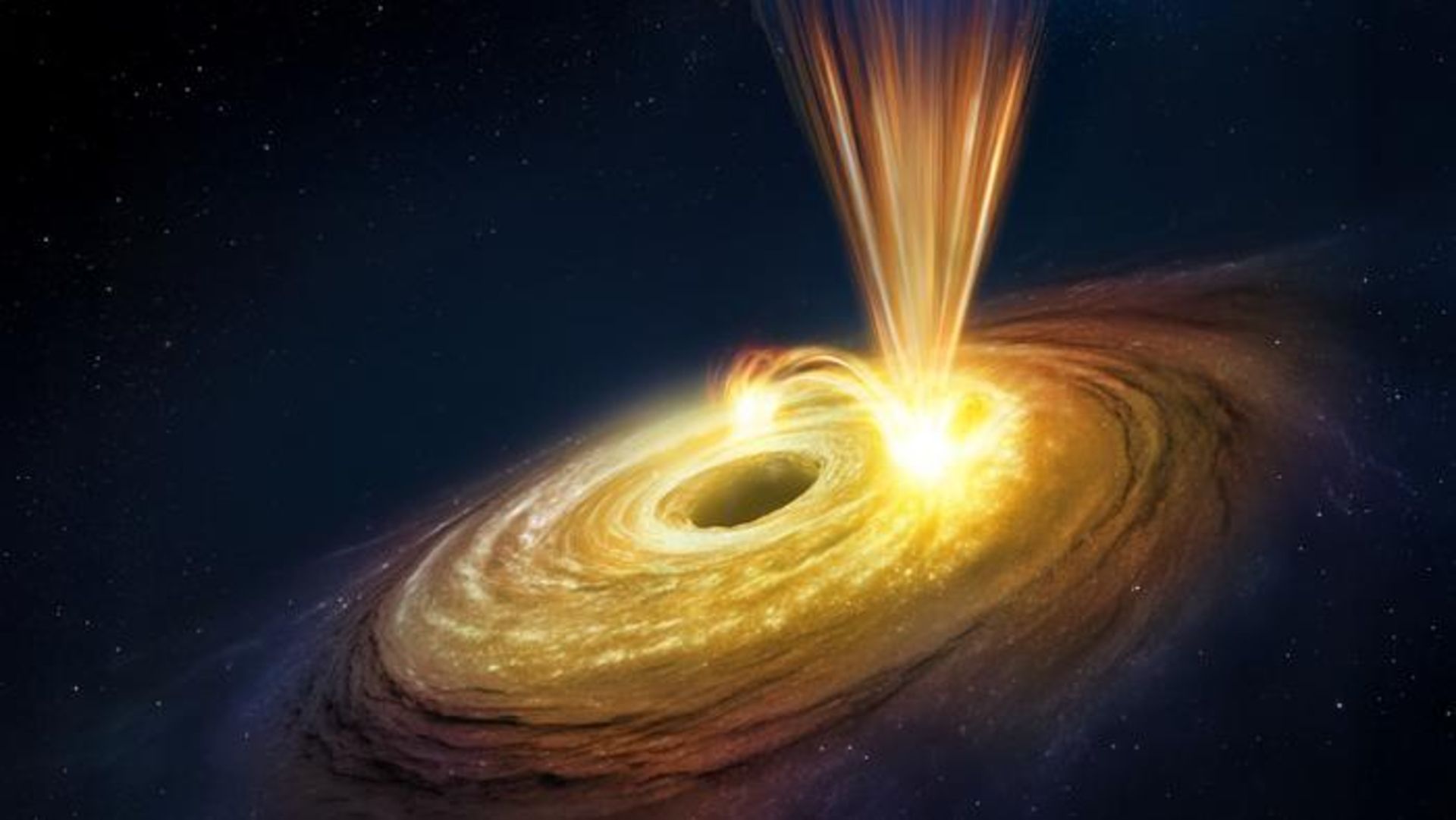
A supermassive black hole in the spiral galaxy NGC 3783 has been observed flinging hot, charged particles into space at a remarkable speed. This cosmic storm, triggered by a powerful X-ray flare, was detected by astronomers using the XRISM and XMM-Newton telescopes. The wind unleashed from the black hole raced outward at 134 million miles per hour, providing insights into the processes around supermassive black holes.
The eruption of X-ray radiation and subsequent wind from the black hole resembled solar flares and coronal mass ejections from our sun but on a much larger scale. The magnetic field around the black hole untwisted, leading to the creation of the winds. The immense mass and magnetic field strength of the black hole result in eruptions of unprecedented power, with winds traveling at 20% the speed of light.
Supermassive black holes are known for producing relativistic jets and flares like the one observed in NGC 3783. These processes play a crucial role in shaping the evolution of galaxies by influencing star formation. Understanding the mechanisms behind these cosmic phenomena is essential for unraveling the impact of supermassive black holes on their host galaxies.
The recent discovery of the cosmic wind from the supermassive black hole in NGC 3783 sheds light on the intricate relationship between black holes and galaxies. By studying these phenomena, astrophysicists aim to gain a deeper understanding of how supermassive black holes influence the evolution of galaxies and the formation of new stars. This research contributes to our knowledge of the universe's history and the role of active galactic nuclei in shaping cosmic structures.
The findings of this study, published in the journal Astronomy and Astrophysics, provide valuable insights into the complex interactions between supermassive black holes and their host galaxies. By investigating the mechanical details of these processes, scientists can further explore the impact of black holes on galactic evolution and star formation, advancing our understanding of the universe's cosmic dynamics.